
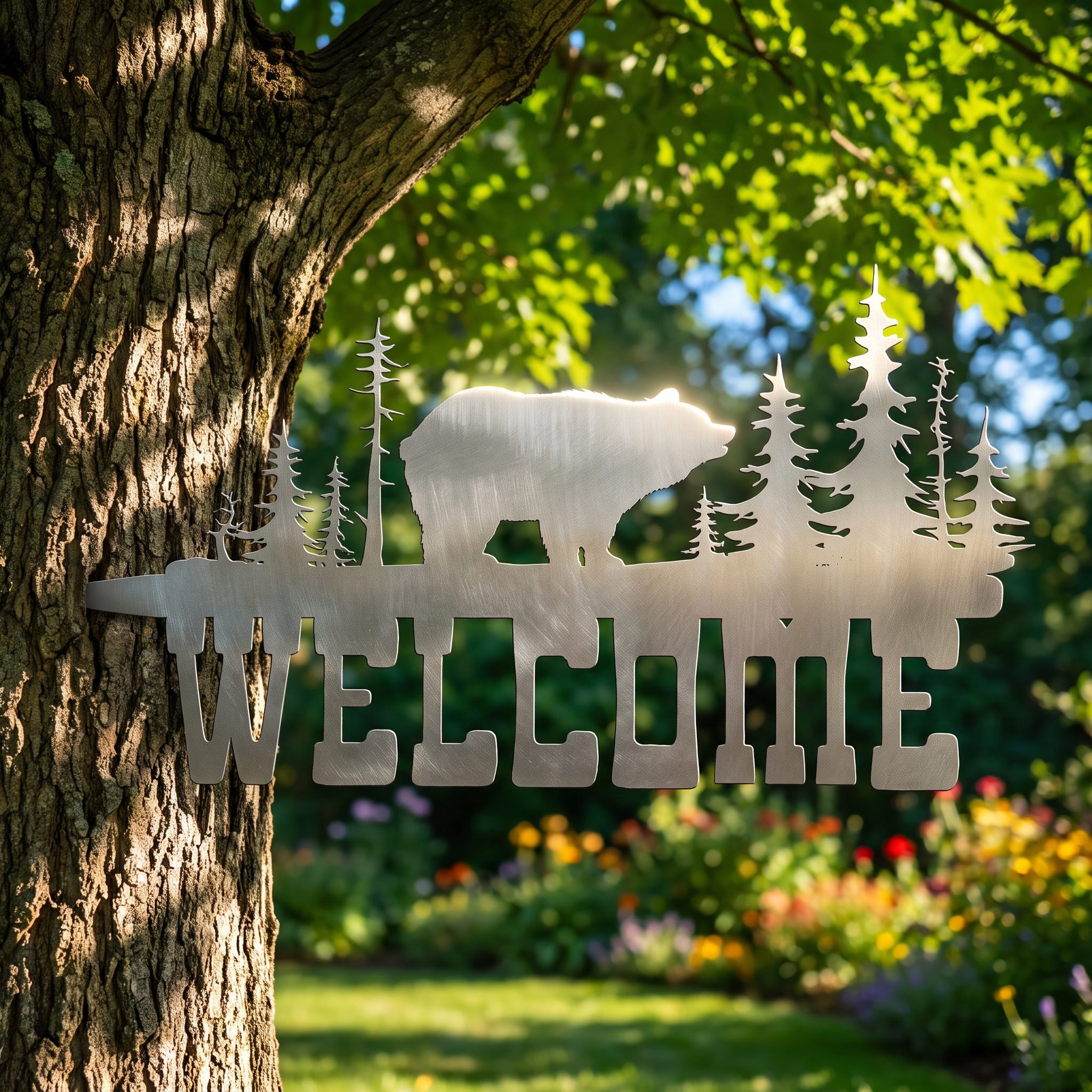
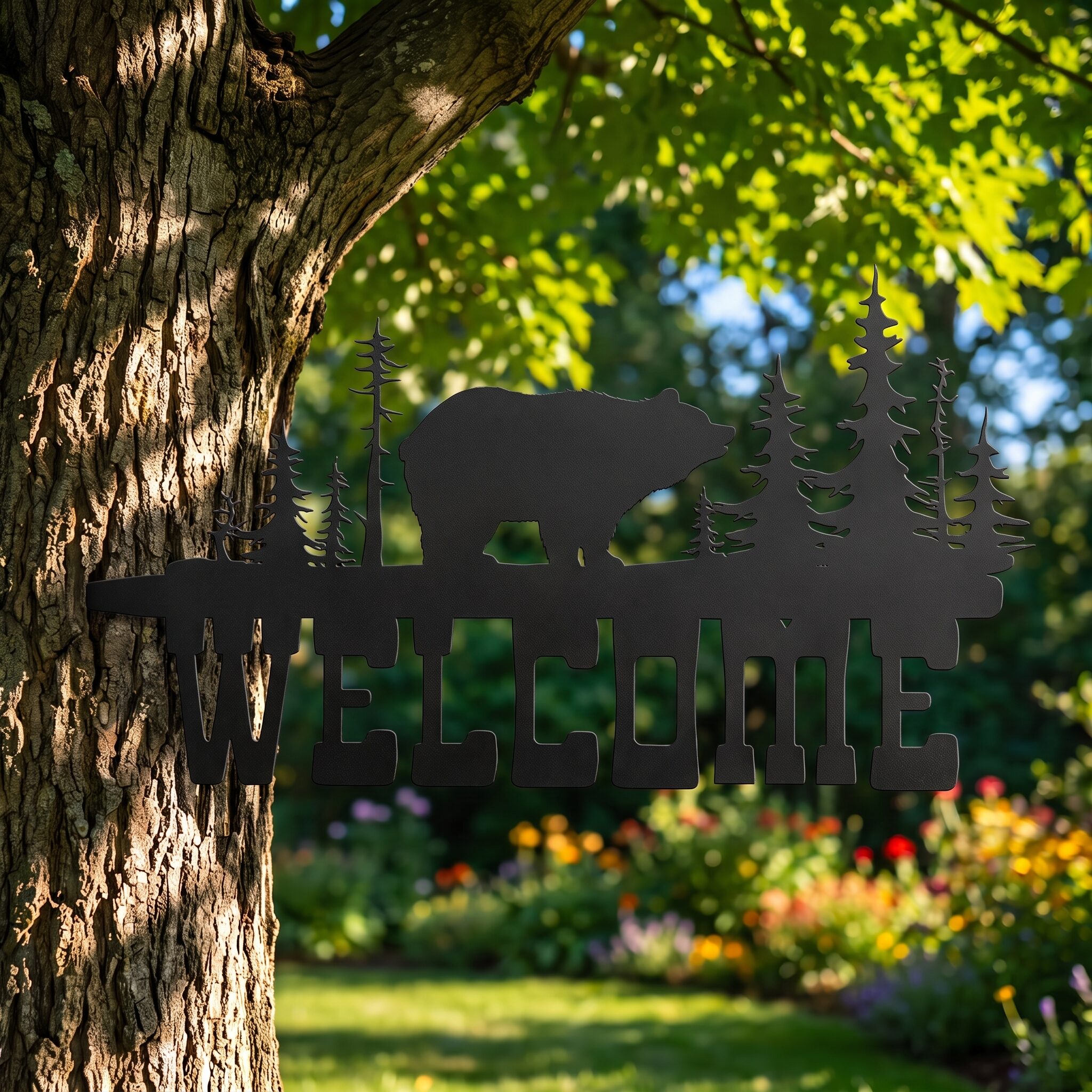


The woods came back, and the bear came with them.
A hundred and fifty years ago most of New England was cleared — pasture and stone wall to the ridgeline, and hardly a bear in it. Then the farms went west, the fields grew up in birch and pine, and the forest returned on its own. The bear followed. There are more black bears in the eastern states today than there were when your great-grandparents were children, and they are still spreading.
Which means the odds are decent that one has walked past your house at night without either of you knowing.
We had this one cut as a scene rather than a specimen: a bear crossing a stand of spruce, and the word underneath in a plain, square, no-nonsense letter. The kind of sign you’d expect on a camp door.
They are more remarkable than their reputation. A denning bear goes four or five months without eating, drinking, or passing waste, and comes out in spring having lost very little muscle — a trick doctors have been studying for years and cannot reproduce. And the nose is the real instrument. A black bear will find a cooler on a porch from a long way off, entirely on scent, which is why the bear-proof latch was invented.
Given for cabins, camps, and the sort of house where people come in the back door without knocking.
Set it where visitors will meet it before they meet you — the tree by the drive, the post at the head of the walk, the wall beside the door.
Specifications
| Faithful to the design | A black bear crossing a stand of pines, above a hand-cut WELCOME |
| Substantial in scale | 17" high x 9" wide |
| Made to weather | Cut from 1/8-inch American Corten® steel |
| Ready for giving | Ships flat in a 16" x 13" x ¼" mailer-friendly box |
| Made in America | Cut in a family-owned factory |
| Simple to set | Sits flush against a tree, post, or wall |
Reviews
There are no reviews yet.