
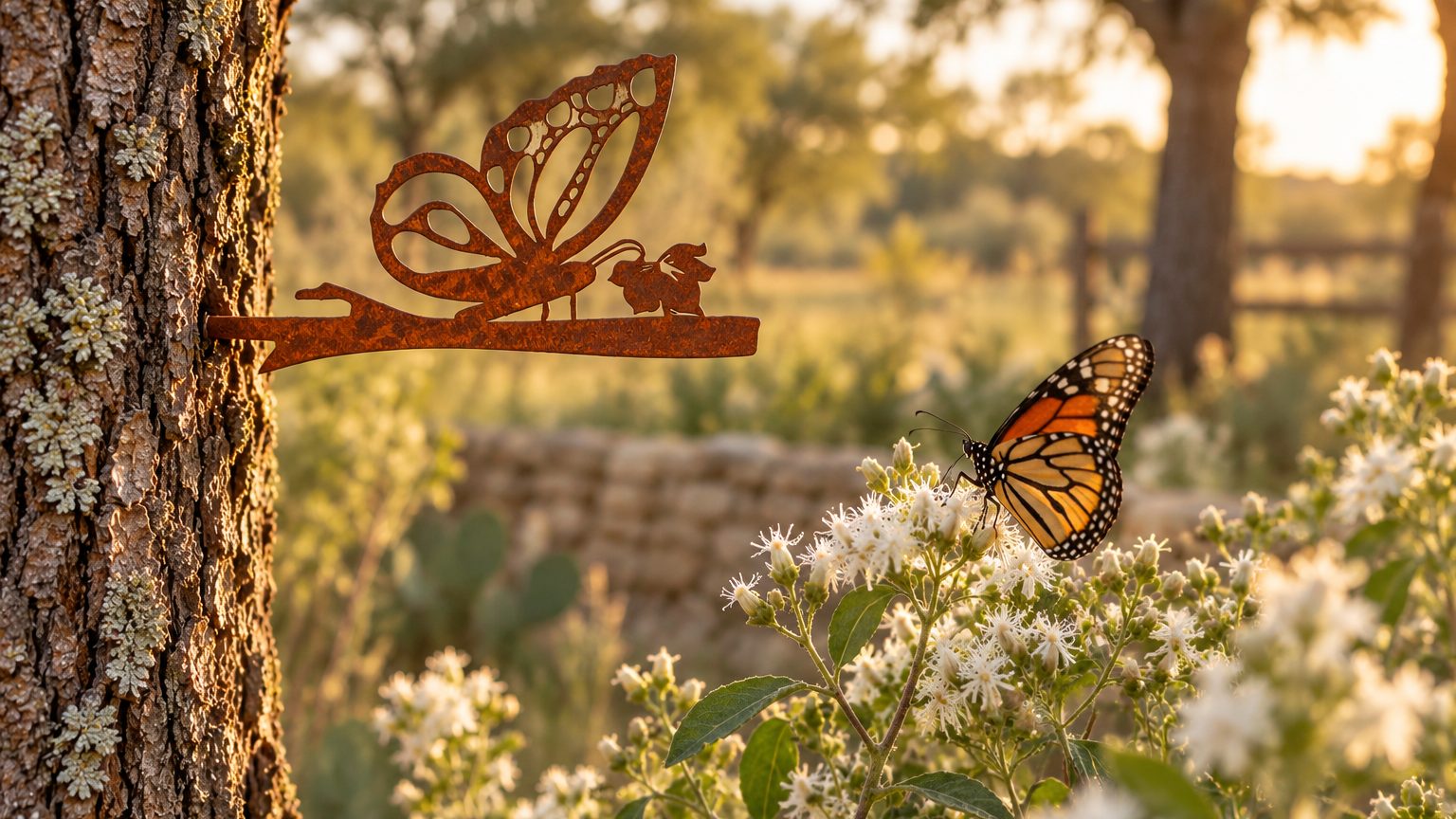
For many people, seeing a butterfly after someone dies feels like a visit, a quiet sense that the person is close. Nobody can prove that, and nobody can take it from you either. The idea is very old: the word psyche is Greek for both “soul” and “butterfly”.
Below are seven honest answers to the questions people ask after a butterfly turns up at a hard moment. Why it happens so often. Why this creature carries the meaning it does. Where the belief comes from, in Greece, in churches and in Mexico. What the colors are said to mean. What butterflies are really doing in a Texas October. Whether releasing butterflies at a service is a good idea. And whether it’s a sign. After that, there’s a practical section on planting a yard butterflies will visit, and a few ways to keep someone close.
Why do so many people describe seeing a butterfly after someone dies?
Partly because of when it happens. Grief makes you notice things you’d usually walk past: the light on the porch, a song on the radio, a butterfly crossing the yard the second you were thinking of her.
Partly because of how butterflies behave. They come close, they linger, and sometimes they land right on you. There’s a plain reason for that last one. A University of Georgia Extension handout on puddling notes that butterflies may land on human skin to collect sodium from sweat, because nectar gives them energy but not much salt.
We’d say both things can be true at once. A butterfly can be after the salt on your arm, and it can still be the thing that made you stop, breathe, and think of someone you love. Seeing a butterfly after someone dies doesn’t need a scientific explanation to matter, and it doesn’t need to be explained away either.
Why a butterfly? The caterpillar, the chrysalis and what comes after
Of all the creatures in a garden, butterflies may carry the clearest picture of change.
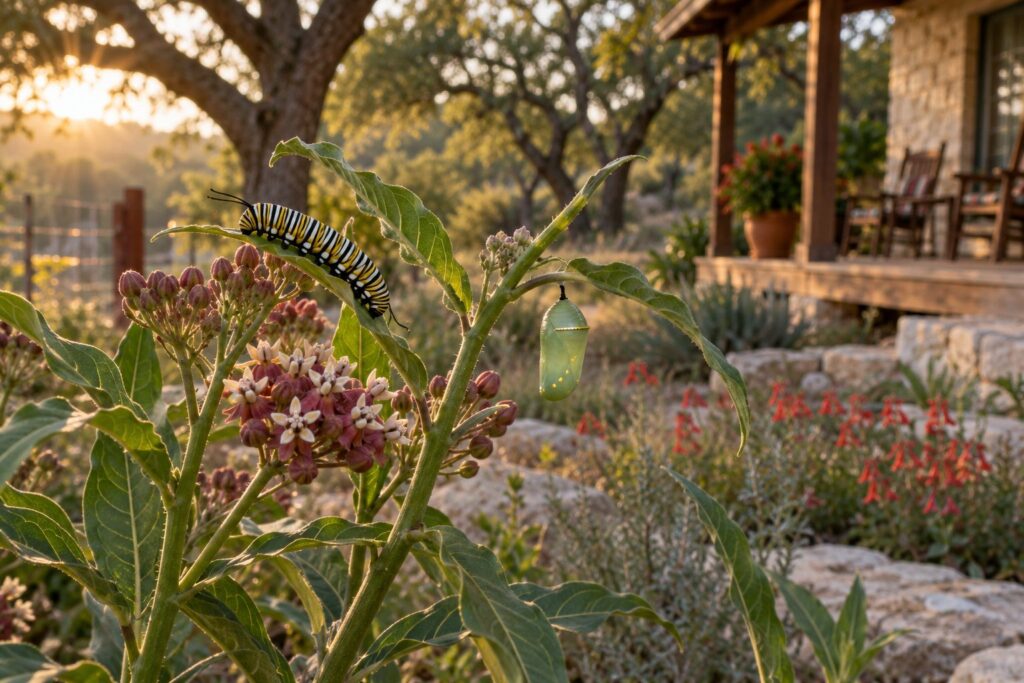
A caterpillar spends its life eating and growing. Then it stops, hangs still and closes itself up in a chrysalis. What happens inside is strange. Scientific American explains that the caterpillar digests itself, releasing enzymes to dissolve its own tissues. Only small, organized groups of cells, which the same article calls imaginal discs, survive the digestive process and go on to build wings, legs and eyes.
So from the outside, the chrysalis looks like an ending. It isn’t the whole story. Something that looked finished comes out changed, and flies.
You don’t need any particular faith to see why that picture comforts people. The person isn’t here the way they were, and yet they don’t feel entirely gone.
Where does butterfly symbolism around death come from?
If you’ve typed butterfly symbolism death into a search bar late at night, you’re in long company. The connection between butterflies and the soul runs through a lot of cultures, and it shows up in very different forms.
Psyche: one word for soul and butterfly
In ancient Greece, the link was built right into the language. Dictionary.com notes that Psyche is Greek for both “soul” and “butterfly”. In the myths, Psyche was also a figure in her own right: the Theoi Project’s classical reference describes her as the goddess of the soul and the wife of Eros, and notes she was shown in ancient mosaics as a butterfly-winged woman.
A 2017 paper in a Brazilian neurology journal traced the same thread, observing that the metamorphosis of the butterfly inspired many to use butterflies as a symbol of the soul’s exit from the body. People were seeing a butterfly as a soul long before anyone was writing sympathy cards.
Christian resurrection symbolism
In Christian teaching, the three stages became a picture of Easter. A reflection published by the Catholic Diocese of Lansing puts it plainly: the metamorphosis of the caterpillar into a butterfly is a symbol of resurrection. The same piece describes how the caterpillar, chrysalis and butterfly came to signify the life, death and resurrection of Christ.
It’s one reason butterflies turn up on Easter banners and funeral programs. For a lot of families, it’s a natural image of hope at a graveside.
Monarchs and Día de Muertos in Mexico
The most striking version of this belief belongs to the monarch. Monarch Joint Venture explains that migrating monarchs arrive in Mexico the same time of year, every year, and that their arrival lines up with Día de Muertos, the Day of the Dead.
For the Purépecha and Mazahua peoples of the region, the same article says, monarchs represent the souls of their ancestors returning to visit. National Wildlife magazine adds that in Mexican tradition the dead may return once a year, on November 1 for children and November 2 for adults, and that by late October, monarchs begin alighting in the mixed pine and oyamel forests of the mountains.
So the butterflies come back just as families are remembering the people they’ve lost. It’s hard to imagine a timing that would mean more.
Other places, the same feeling
The belief turns up far from Mexico too. One entry in the USC Digital Folklore Archives records a Thai family’s understanding, shared at a grandmother’s funeral, that butterflies are containers for souls, and that they carry souls away. Different words, different faith, much the same comfort.
What do butterfly colors mean?
This is where honesty matters, because the folk beliefs don’t agree with each other. Color meanings get passed along by grandmothers and neighbors, and they change from one family to the next.
A few you may hear:
- White. In one account in the USC folklore archive, an older woman said a white butterfly indicates good luck, and only if it’s the first one you see that year.
- Black. The same archive entry records a belief that a black butterfly landing on you means illness or a death close by. Yet the Thai family above saw a black butterfly over a coffin as a soul being carried home.
- Yellow. The folklore site Spooky Isles notes that some traditions connect yellow butterflies with the spirit world.
- Brown. The same collection says a brown butterfly has been read as a sign that news or an important message is on its way.
- Orange. Through the monarch and Día de Muertos, orange carries the meaning of ancestors returning to visit.
Notice that the same black butterfly is a warning in one telling and a comfort in another. That’s the honest point. Color meanings are beliefs, held by particular people in particular places, and none of them is a rule. If one of them comforts you, keep it. If one of them frightens you, you’re free to set it down.
What are butterflies actually doing in a Texas fall?
If you’re in Texas and a butterfly has been turning up in October, you may be watching one small stretch of a very long trip.
Texas Parks and Wildlife describes a monarch flyway that traverses Texas in a 300-mile wide path stretching from Wichita Falls to Eagle Pass. The butterflies enter the Texas portion of this flyway during the last days of September, and by early November, most have passed through into Mexico. A second, coastal flyway lasts roughly from the third week of October to the middle of November.
Wizzie Brown of Texas A&M AgriLife says monarchs usually start heading south through Texas around September into November, and that they rely on a wide variety of nectar-producing plants during fall migration.
Put that together and the October visitor in your yard is likely stopping to refuel on its way south. National Wildlife magazine notes that this southern migration ends in South-Central Mexico around Día de los Muertos, so the monarch on your fall asters this week may be one of the butterflies families there will welcome as ancestors a few weeks from now.
You may see queens as well as monarchs. The Wildflower Center lists both monarchs and queens as butterflies whose caterpillars feed on antelope horns milkweed.
How to make a yard butterflies will visit
Whatever you make of the meaning, there’s one thing anyone can do: give butterflies a reason to come. A yard planted for them means more visits, every season, for years.
Start with native milkweed
Milkweed is where it starts. The Lady Bird Johnson Wildflower Center notes that milkweed species are the food source for Monarch butterfly caterpillars, and Texas has plenty to choose from: Texas Parks and Wildlife counts over 35 different milkweed species recorded from Texas.
- Antelope horns (Asclepias asperula). A native of Texas meadows and roadsides, from the Blackland Prairie to Edwards Plateau. It wants sun and prefers rocky or sandy soils, and it flowers heavily in spring, sporadically summer through fall.
- Choose native over tropical. KUT reported that much of the milkweed sold commercially is non-native “tropical” milkweed, which can keep growing into winter; if monarchs stay instead of migrating, they can become more susceptible to disease or even die in the winter cold.
- A word for pet owners. The Wildflower Center notes that antelope horns is reported to be toxic to animals, so plant it where dogs and grazing animals won’t chew on it.
The Wildflower Center’s monarch work leans on natives, noting that native Texas species of milkweed are likeliest to thrive since they are adapted to local environments.
Add fall nectar
In spring, milkweed matters most. In fall, it’s the flowers. Texas A&M AgriLife lists Gregg’s mistflower, frostweed, fall aster, Maximilian sunflower, blazing star, goldenrod, flame acanthus and buttonbush as native perennials for migrating monarchs.
- Gregg’s mistflower for a sunny bed. The Wildflower Center says its fuzzy flowers bloom spring through fall and are especially beloved by queen and monarch butterflies.
- Frostweed for the shady edge. It grows in the dappled shade found at the edges of woodlands and blooms from July into December, according to the Wildflower Center’s plant database.
Give them sun, room and a drink
Monarch Watch, which runs the Monarch Waystation program, suggests at least 10 milkweed plants, made up of two or more species, in a spot that gets at least six hours of sun a day. Their full waystations function best when they are at least 100 square feet, but a smaller bed still feeds butterflies passing through.
Add a puddling dish. The UGA Extension handout suggests you select a big shallow pot saucer, fill it with sand, and add water to the level of the sand. Set it in the sun near the flowers and keep it damp.
And go easy on sprays. Andrea DeLong-Amaya of the Wildflower Center told KUT that when caterpillars eat plants treated with insecticide, they get poisoned, and it could be transferred into the nectar. Ask your nursery whether plants were treated before you buy.
Our guide to memorial garden ideas for a small space walks through laying out a bed like this around a bench, a stone or a favorite tree.
Should you release butterflies at a memorial?
It’s a lovely thought: a box opens at the graveside and butterflies lift into the air. It’s easy to see why families ask for it.
The people who study butterflies have real concerns, though, and they’re worth knowing before you order a box.
- Disease. A joint statement hosted by the Xerces Society, signed by monarch researchers, says mass production makes it easy to transmit disease, and that many purchased monarchs from commercial growers were heavily infected with a parasite called OE.
- Weaker butterflies. The same statement notes that reared monarchs were less likely to be recovered in the Mexican overwintering grounds than their wild counterparts.
- The moment itself. Writers for the North American Butterfly Association warn that shipped butterflies not infrequently arrive dead, or half-dead, which is a hard thing to open in front of a grieving family.
- Wild populations. In the UK, Butterfly Conservation has raised concern that released butterflies have the potential to affect the genetic makeup of the species in the wild.
The authors of the Xerces statement are direct about it: they do not support the release of purchased or mass-reared monarchs, whether for weddings, funerals, and other celebrations.
Gentler alternatives to a release
The NABA writers sum it up in their title: there’s no need to release butterflies, they’re already free. A few ways to honor that:
- Hand out seed. Small packets of a native nectar flower, tucked into the service program, so everyone plants something that brings butterflies back.
- Plant one milkweed for the person. On the day of the service, or on the first anniversary.
- Tag a monarch. Texas Parks and Wildlife invites people to tag monarchs during fall migration to help learn about their travels through Texas. There’s something fitting about sending one on its way with a number that someone may find in Mexico.
- Throw petals. For weddings, the NABA writers suggest throwing rose petals instead, and the same idea works at a graveside.
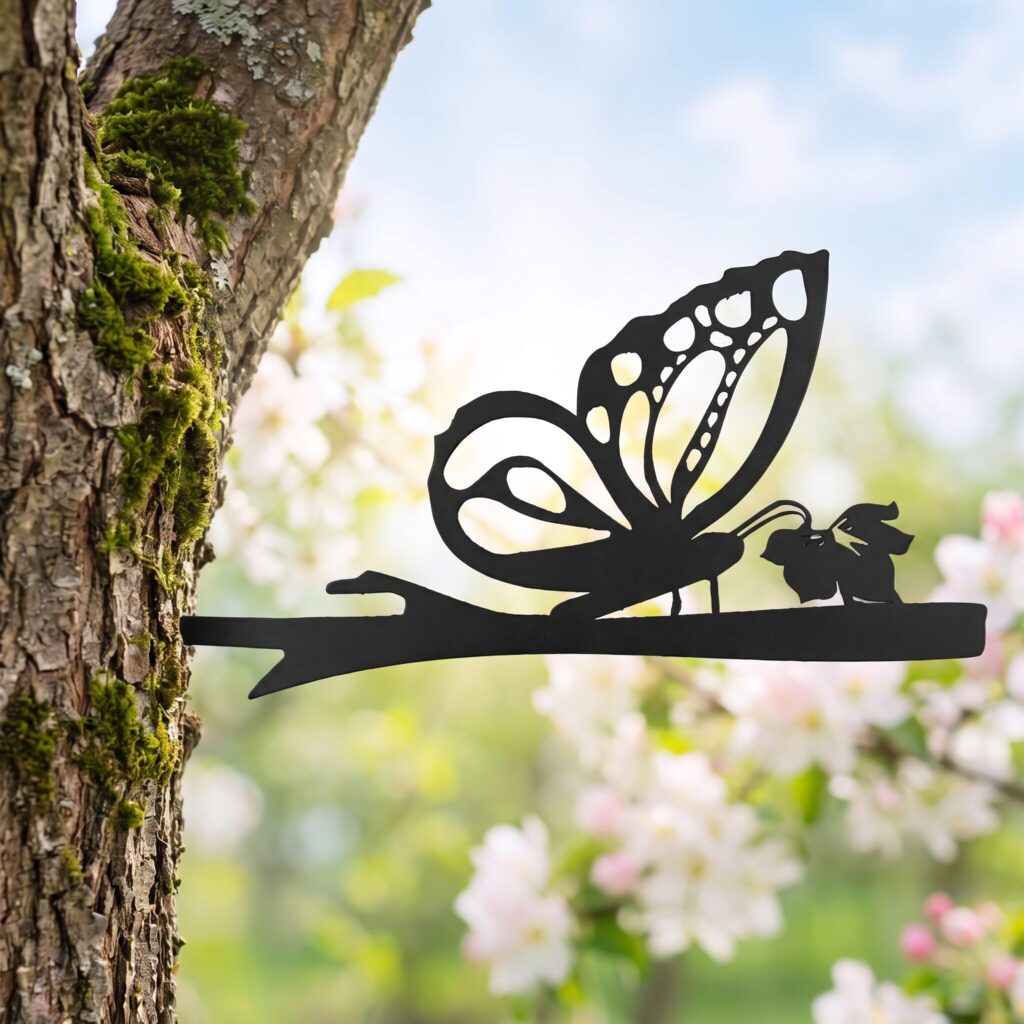
- Keep one that stays. A steel butterfly on the tree by the house doesn’t fly off when the service ends.
Is a butterfly a sign from someone who has died?
That’s not ours to say, and we don’t think anyone can say it for you.
What we can say is that the feeling is common, sincere and very old. People in ancient Greece, in Christian churches, in the mountains of Michoacán and in a Thai funeral hall have all found meaning in a butterfly. If seeing one on the porch makes you think of your mother, the butterfly has done something real for you, whatever else is or isn’t true.
It’s also true that a butterfly in your Texas yard in October may be a monarch on its way south, stopping for nectar and salt. Those two truths sit side by side. You can hold the belief as faith, as comfort, or simply as a way of remembering, and nobody gets to grade it.
If you’re grieving right now
If you’re reading this because a butterfly turned up at a hard time, we’re sorry for your loss.
Some people keep a note of when they see one. Some find that someone else in the family has been seeing them too. Some plant mistflower where their person liked to sit, so butterflies have a reason to keep coming.
And if the days are heavy, say so out loud to someone who cares about you. A butterfly at the window is a good reason to call a friend.
Ways to remember someone with butterflies
There’s no right way to do this. A few that people come back to:
- Plant for them. A small bed of milkweed and fall nectar flowers, near a window, so you see what visits.
- Mark the dates. Plant something new each spring on a birthday, or each October when the monarchs come through.
- Keep a record. A notebook by the back door for every butterfly that stops. In time it becomes its own kind of letter.
- Pair it with other birds and creatures you connect with them. If a cardinal means something to you as well, our piece on what it means when you see a cardinal goes into that belief.
- Give one to someone else who’s grieving. Our guide to sympathy gift ideas instead of flowers has more on giving something that lasts past the first week.
If the person you’re missing is your mother, spring can bring a hard Sunday in May. Our piece on getting through Mother’s Day without mom has a few ideas for that day, butterflies among them.
Keeping a butterfly in the yard all year
Real butterflies come and go with the season. Some people want one that stays.
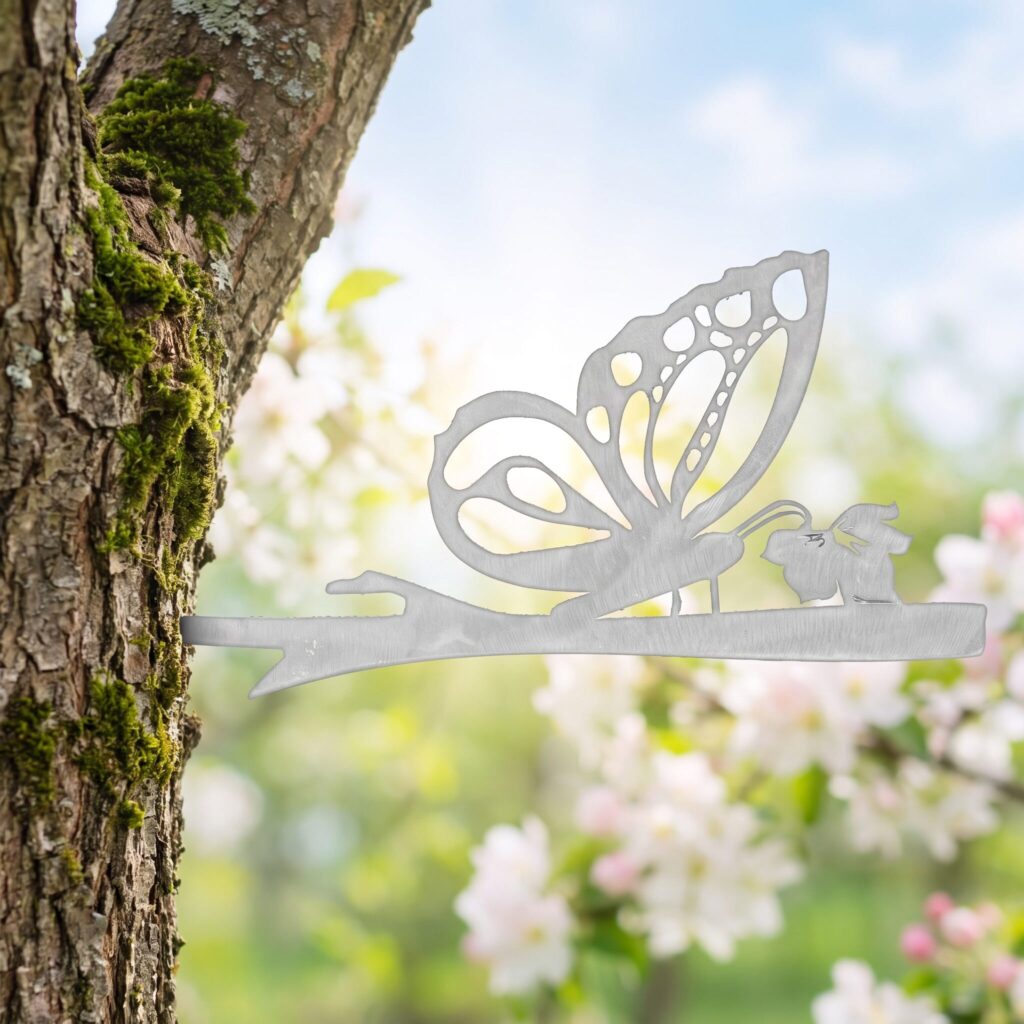
The Butterflies Stake is a small flight of butterflies cut from solid steel. It taps into a tree, a wooden fence post, a porch post or a wall with a hammer, so it can go by the window, the bench or the bed you planted for them. It comes in a Raw Steel finish that weathers outdoors, with most of the change in the first several months, or in Black, which keeps a clean, consistent look.
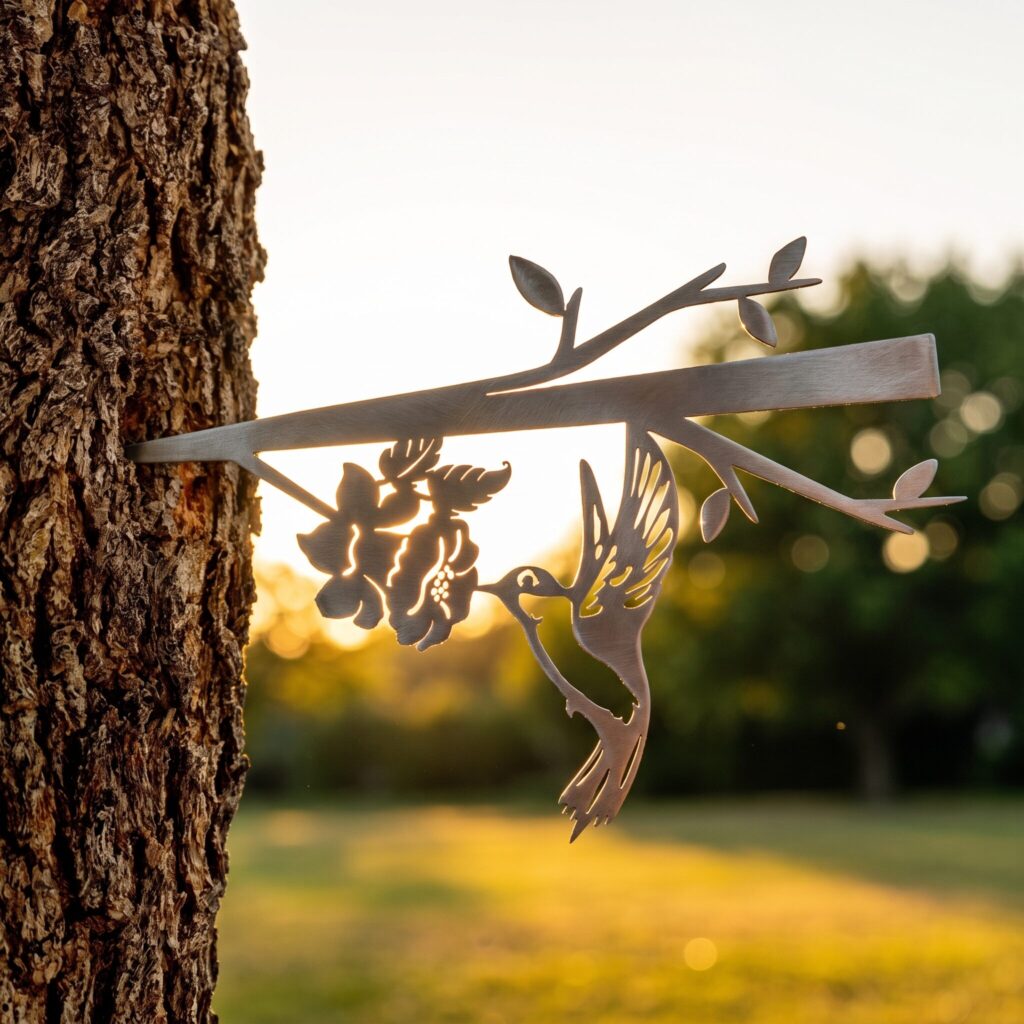
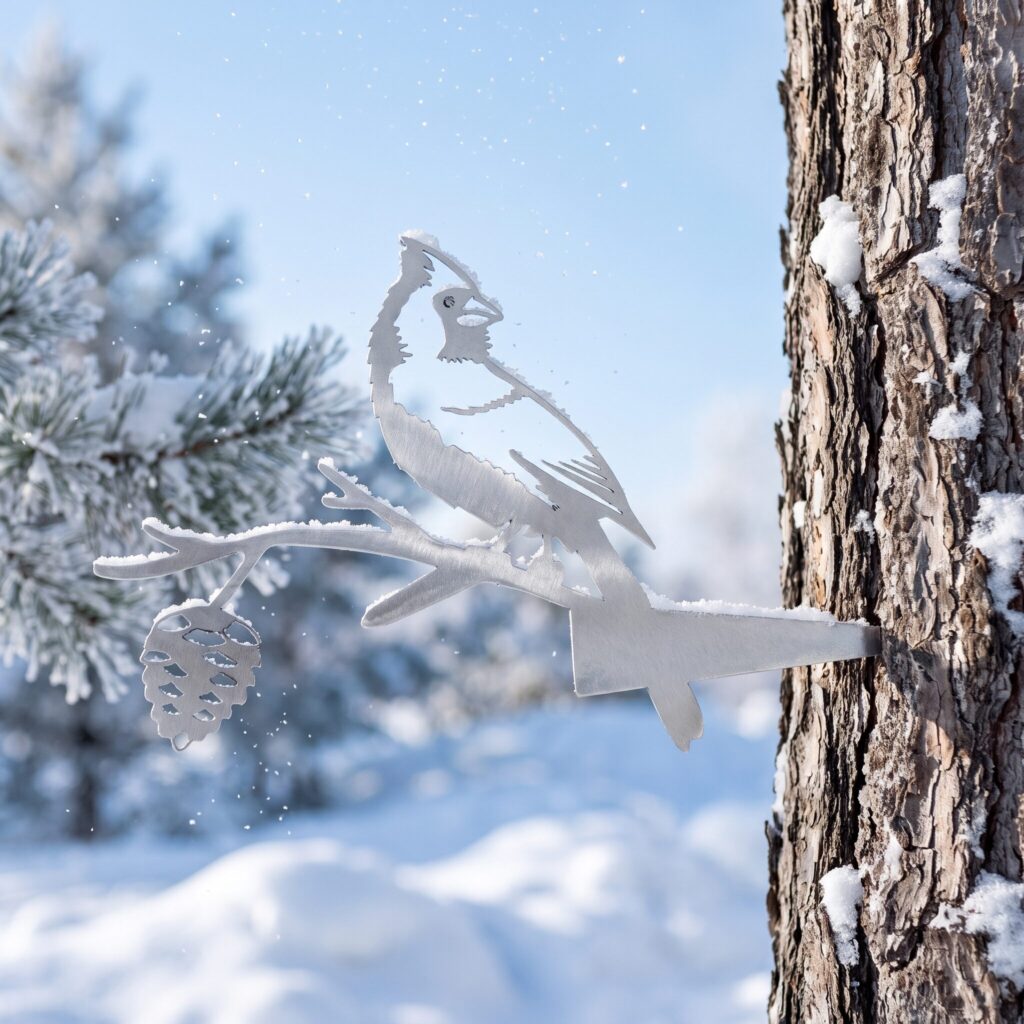
If the person you’re remembering loved hummingbirds at the feeder, the Hummingbird Stake catches one mid-hover. If it’s a cardinal that turns up for you in winter, the Cardinal Stake keeps one on the tree through every season. You’ll find the rest of the small creatures in Critters, and the full tree line of birds in Birds.
Most pieces run 7 to 17 inches, and each product page lists the exact size, so you can hold a tape measure to the trunk before you order.
Questions customers ask
How do I install it?
Choose your spot, then tap the stake in with a hammer. If the wood is hard, drill a small pilot hole first and it will go in easier.
What are Shadow Birds pieces made of?
Solid steel. Most pieces come in a Raw Steel or Black finish.
Will the Raw Steel finish rust?
It weathers outdoors on purpose. Most of the change happens in the first several months, then it holds steady. If you’d rather keep a clean, consistent look, choose Black.
Sources
- Psyche, Dictionary.com
- Psyche, Theoi Project (Greek mythology reference)
- Soul, butterfly, mythological nymph: psyche in philosophy and neuroscience, Arquivos de Neuro-Psiquiatria via SciELO, March 2017
- Going Deeper: Butterflies and Easter, Catholic Diocese of Lansing, April 2020
- How does a caterpillar turn into a butterfly? Scientific American
- Monarchs and Día de Muertos in Mexico, Monarch Joint Venture (Rita Morris), 2 November 2020
- A Monarch Migration Timed to Mexico’s Day of the Dead, National Wildlife magazine, National Wildlife Federation (Christin Parcerisa), 26 September 2024
- Thai folk belief: Butterflies carry souls, USC Digital Folklore Archives, 2012
- Good Luck Butterflies, USC Digital Folklore Archives, 2017
- Butterfly Superstitions: What Does Seeing a Butterfly Mean? Spooky Isles, 12 April 2023
- The Monarch Butterfly and Other Insect Pollinators, Texas Parks and Wildlife Department
- Beyond Milkweed: Creating a Migratory Oasis for Monarch Butterflies, Texas A&M AgriLife (Sarah Fuller), 29 May 2024
- Asclepias asperula (antelope horns), Lady Bird Johnson Wildflower Center Native Plants Database
- Verbesina virginica (frostweed), Lady Bird Johnson Wildflower Center Native Plants Database
- Wildflower of the Year 2025: Gregg’s mistflower, Lady Bird Johnson Wildflower Center
- Wild About Monarchs, Lady Bird Johnson Wildflower Center (Barbra Rodriguez), 1 October 2015
- How to Help Monarch Butterflies Without Accidentally Luring Them to Their Deaths, KUT 90.5 (Mose Buchele), 16 September 2016
- Monarch Waystation Program, Monarch Watch
- Butterflies and Puddles: The Secret to Their Success, University of Georgia Extension, Gwinnett County
- Joint Statement Regarding Captive Breeding and Releasing of Monarchs, Xerces Society
- There’s No Need to Release Butterflies, They’re Already Free, North American Butterfly Association (Glassberg, Opler, Pyle, Robbins and Tuttle)
- Releasing butterflies at weddings, Butterfly Conservation, 21 September 2017