
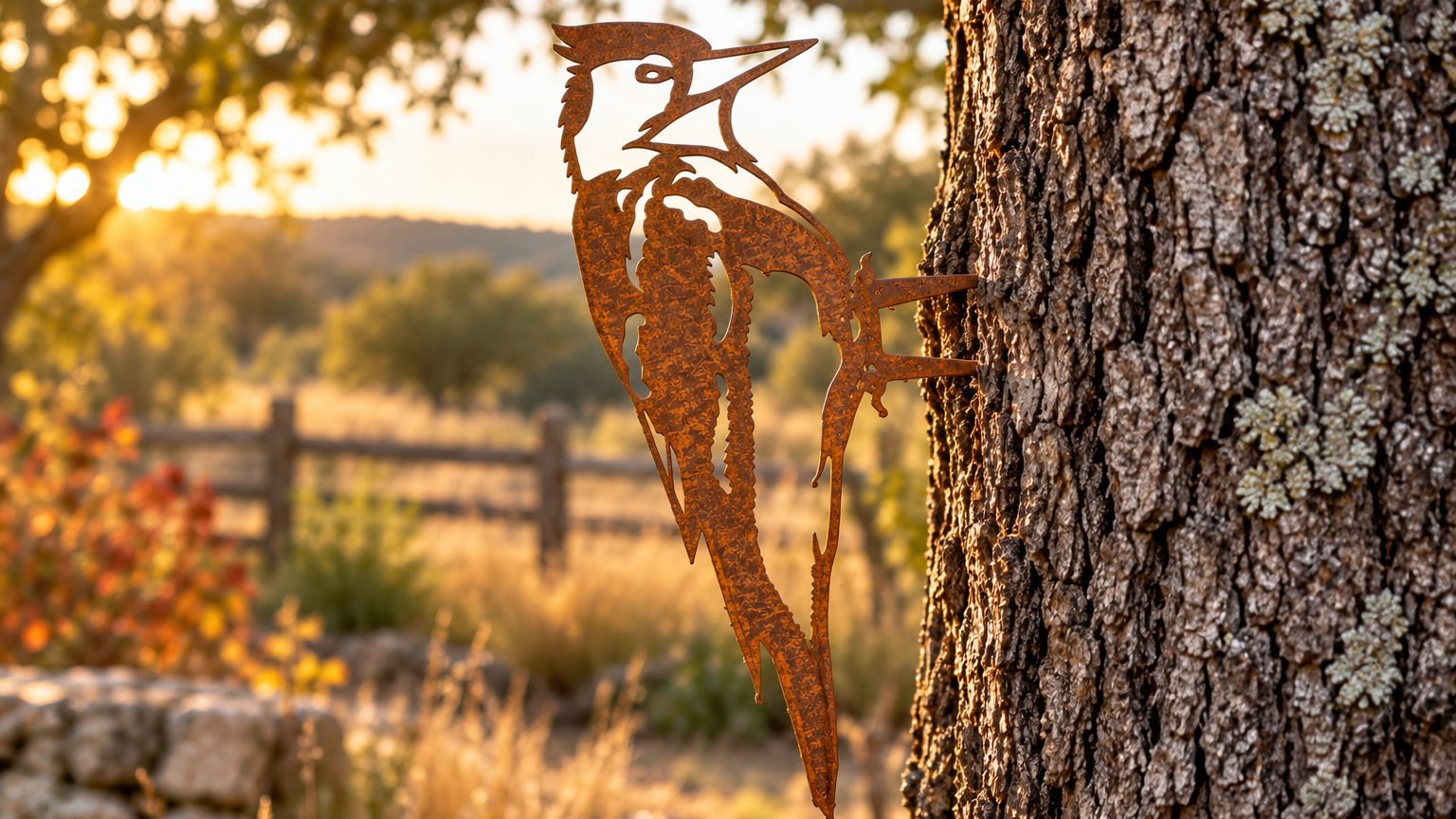
Yes, on the surface, and on purpose. Corten steel yard art forms a layer of rust that settles into a protective patina that slows further corrosion. On our Raw Steel finish, most of the color change happens in the first several months, then it holds steady.
That’s the short answer. The rest of this guide covers the nine things people ask before they buy Corten steel for the yard: what the steel is, why it’s meant to rust, how long the change takes, what color it ends up, how your weather affects it, whether it will stain, what upkeep it needs, and how to choose between Raw Steel and Black.
What is Corten steel?
Corten® is a weathering steel. It’s an alloy made to rust in a controlled way instead of flaking apart.
The American Institute of Steel Construction describes weathering steel as an alloy with copper, chromium, nickel and other elements that improve its resistance to corrosion. Under normal outdoor conditions, it forms a rust layer that acts as its own coating, so it doesn’t need paint.
The name has a plain history. According to the metalwork firm A. Zahner Company, U.S. Steel first developed weathering steel in the 1930s for the hopper cars that hauled coal and iron ore, and later trademarked the name COR-TEN®. The same source explains the name: COR for corrosion resistance and TEN for tensile strength.
Architects picked it up in the decades after, and that’s where most people first saw it: rust-brown buildings, bridges and sculptures that look finished without a coat of paint.
Every Shadow Birds piece is cut from 1/8-inch American Corten® steel.
Why does Corten steel rust on purpose?
Ordinary steel rusts and keeps rusting. The rust flakes off, fresh metal is exposed, and the cycle repeats until the steel is gone.
Weathering steel behaves differently. The AISC explains that over a relatively short period, the patina forms into an impervious layer that precludes further corrosion. The rust on the outside protects the steel underneath.
That’s the whole idea behind Corten steel yard art. The weathered surface isn’t a flaw you put up with. It’s the finish.
Why gardens and architects use Corten steel
Weathering steel left the rail yard a long time ago. Zahner notes that architectural use of weathering steel began in the 1950s, and since then it has turned up on building facades, bridges and outdoor sculpture.
In gardens, you’ll see Corten steel used for planters, bed edging, privacy screens and fire pits. Landscape designers like it for the same reasons it suits yard art:
- It doesn’t need paint. The patina is the finish.
- It looks at home outdoors. The brown sits easily next to bark, soil, stone and wood.
- It changes with time. A Corten steel planter or bird looks a little different every year, the way a garden does.
Corten steel yard art is the same idea at a smaller scale: a piece that looks finished on the day you set it, and looks more settled every season after.
How long does the patina take to form?
Out of the box, our Raw Steel finish is untreated steel. Once it’s outside, rain and dew start the weathering. Most of the change shows up in the first several months, then the color holds steady.
The AISC doesn’t put a fixed number on it either. It describes the patina forming over a relatively short period of time, and the speed depends on the weather the steel sees.
A rough way to think about it:
- The first few weeks. You’ll see the bare steel start to change color, often unevenly, wherever it gets wet first.
- The first several months. The color evens out and deepens. This is when most of the change happens.
- After that. The color holds steady, with slow deepening over time.
What color will Corten steel turn?
Early on, the AISC describes the coating as reddish-orange brown, deepening to a purple-brown as it ages.
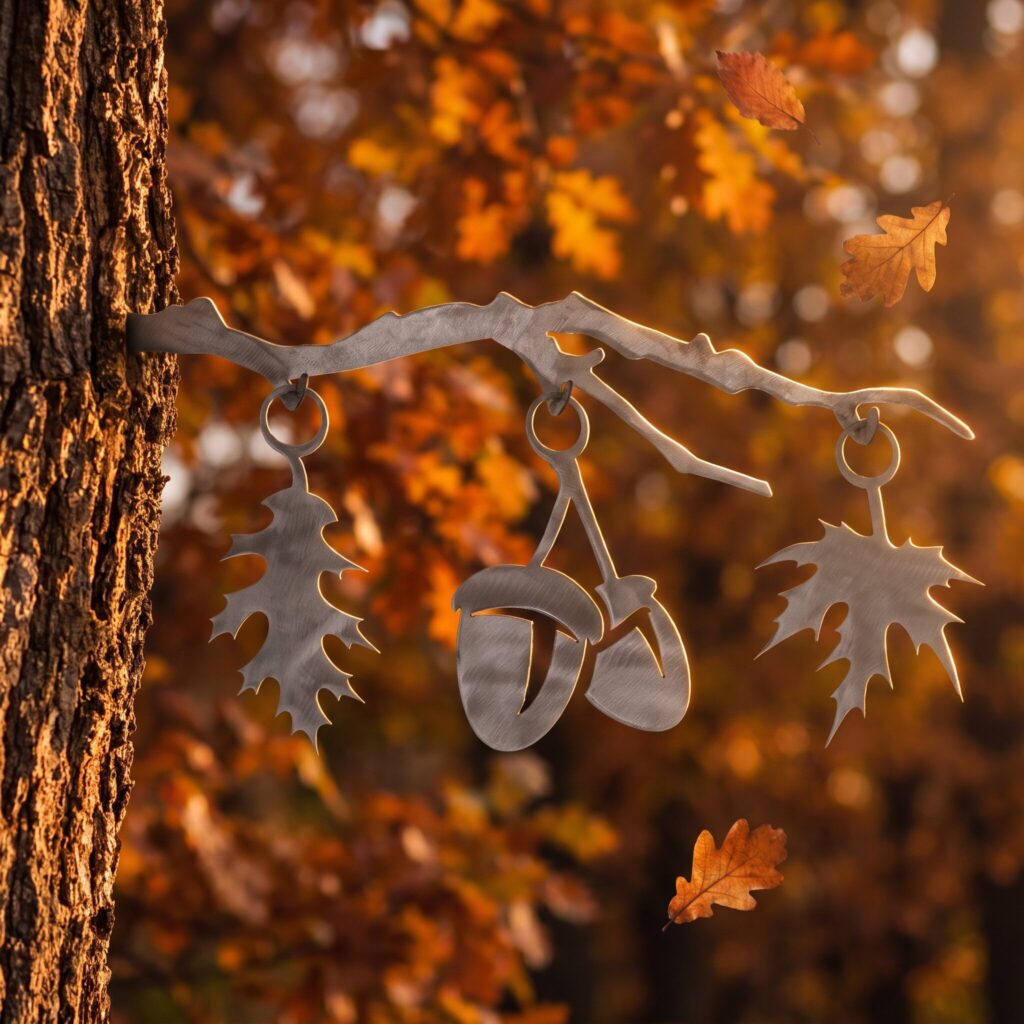
In a yard, that reads as a warm, earthy brown that sits well against bark, mulch, stone and green leaves. It’s the same color family as the trunk it’s set in, which is why a weathered steel bird on a tree tends to look like it belongs there.
If you’d rather have something that stays exactly as it arrived, that’s what the Black finish is for. More on choosing between them below.
Does the weather where you live change things?
It does. Corten steel needs a particular rhythm to form its patina: wet, then dry.
The AISC calls frequent wet and dry cycles the key to the protective coating. Moisture from rain or dew has to dry out in sun and wind. A piece that gets rained on and then sees sun does what it’s meant to.
Two situations need more thought:
- Spots that stay wet. The AISC lists constantly wet or humid environments where the steel can’t dry among the conditions where weathering steel doesn’t do well. A trunk in deep shade under a dripping canopy, pressed against damp moss, is a worse home than one with sun and air moving around it.
- The coast. Salt is the big one. The AISC is blunt about it: salt precludes the development of the protective patina and dramatically accelerates corrosion. If you live where salt spray reaches the yard, think twice about the Raw Steel finish.
Most backyards inland, with ordinary rain and sun, give Corten steel exactly the cycle it wants.
Will Corten steel stain my fence, porch or concrete?
It can, while the patina is forming. This is the one thing worth planning around.
The AISC notes that rust-laden runoff can stain surfaces below while the patina forms. Rain runs over the steel, picks up a little rust, and leaves it on whatever it drips onto.
A few simple ways to avoid it:
- Let it drip onto soil, mulch or bark. A piece on a tree trunk mostly drips onto the trunk and the ground beneath it, and that’s rarely a problem.
- Keep it clear of pale surfaces. Don’t hang a Raw Steel piece directly above pale concrete, light stone, stucco or a white-painted rail.
- Mind the porch post. If you’re setting it on a post, check what’s directly below. A few inches to one side can put the drip line on the flower bed instead of the steps.
The staining eases with time. The AISC says it’s less intense after the initial weathering, and can be left to fade. If a mark has already appeared, moving the piece a few inches so it drips onto soil or mulch usually solves it for good.
Does weathering steel need maintenance or paint?
Not much. Because the patina is its own coating, the AISC notes weathering steel doesn’t need painting.
For Corten steel yard art, care comes down to a few things you don’t do:
- Don’t scrub it. Scrubbing it back to bare metal just starts the weathering over.
- Don’t paint over the Raw Steel finish unless you mean to change it for good.
- Don’t keep it wet. If it’s somewhere that never dries out, move it somewhere with sun and air.
If you want to clean off cobwebs or garden dust, a rinse with the hose is plenty.
Sprinklers, gutters and other water to watch
Rain is fine. Water that never lets up is the thing to watch, because the AISC lists places where the steel can’t dry out among the conditions where weathering steel struggles.
Around a house, that usually means:
- A sprinkler head that hits the trunk every morning. Turn the head a few degrees, or pick a different trunk.
- The spot under a downspout or a dripping gutter. Water pours over it every time it rains, and the surface rarely gets a chance to dry.
- A low, shaded corner where moss grows on the bark. If moss likes it, Corten steel probably won’t.
None of these ruin a piece overnight. They just stop the patina from doing its job, so it’s worth five minutes of thought before you pick the spot.
How long will Corten steel yard art last?
We won’t put a number of years on it, because the honest answer depends on where it hangs.
What we can say is how the steel is meant to work. Weathering steel builds a rust layer that the AISC describes as an impervious layer that precludes further corrosion, and every Shadow Birds piece is cut from 1/8-inch Corten® steel, not thin sheet metal.
Give it what weathering steel wants, which is rain followed by sun and air, and keep it away from salt spray and constant wetness, and you’ve done everything the steel asks of you.
Can you stop Corten steel from changing?
If you want a finish that doesn’t change, choose Black instead. That’s the simplest way to get a clean, consistent look from the first day to the tenth year.
The Raw Steel finish is untreated, and it’s meant to weather. Its color settling into the yard is the point of it, so if that isn’t what you’re after, the Black finish is the better match for you.
Small things people wonder about with Corten steel
A few smaller questions come up once the piece is in the yard.
Will the surface rust come off on my hands? While the patina is still forming, fresh surface rust can leave a little color on your fingers. It washes off. Once the surface has settled, there’s much less of it. When you set a Raw Steel piece, hold it by the edges and keep it off light-colored clothes.
Is the uneven color a problem? No. Corten steel rarely weathers evenly at first. The parts that get wet first change first, so you may see streaks or patches in the early weeks. They blend as the patina develops across the whole surface.
Why does it look gray when it arrives? Raw Steel is untreated, so it arrives as bare, dark gray steel. Give it the first several months outdoors, and it settles into the weathered color.
Why does my piece look darker after it rains? Wet weathering steel looks deeper and richer, the way wet stone does. It lightens again as it dries, and that wet-then-dry cycle is exactly what the AISC says builds the protective coating.
Raw Steel or Black: which should you choose?
Most pieces come in a Raw Steel or Black finish. Neither is a wrong answer. It comes down to the look you want and where the piece will hang.
Choose Raw Steel if:
- You like the idea of the piece settling into the yard and changing with it.
- It’s going on a tree trunk or a wooden post, with soil or mulch underneath.
- Your yard leans rustic: bark, stone, old fences, a lot of green.
Choose Black if:
- You’d rather skip the weathering and keep a clean, consistent look.
- It’s going above a pale surface, like light concrete, stucco or white trim.
- Your house leans modern, and a crisp dark silhouette suits it.
- You live near the coast and want to stay clear of the salt question.
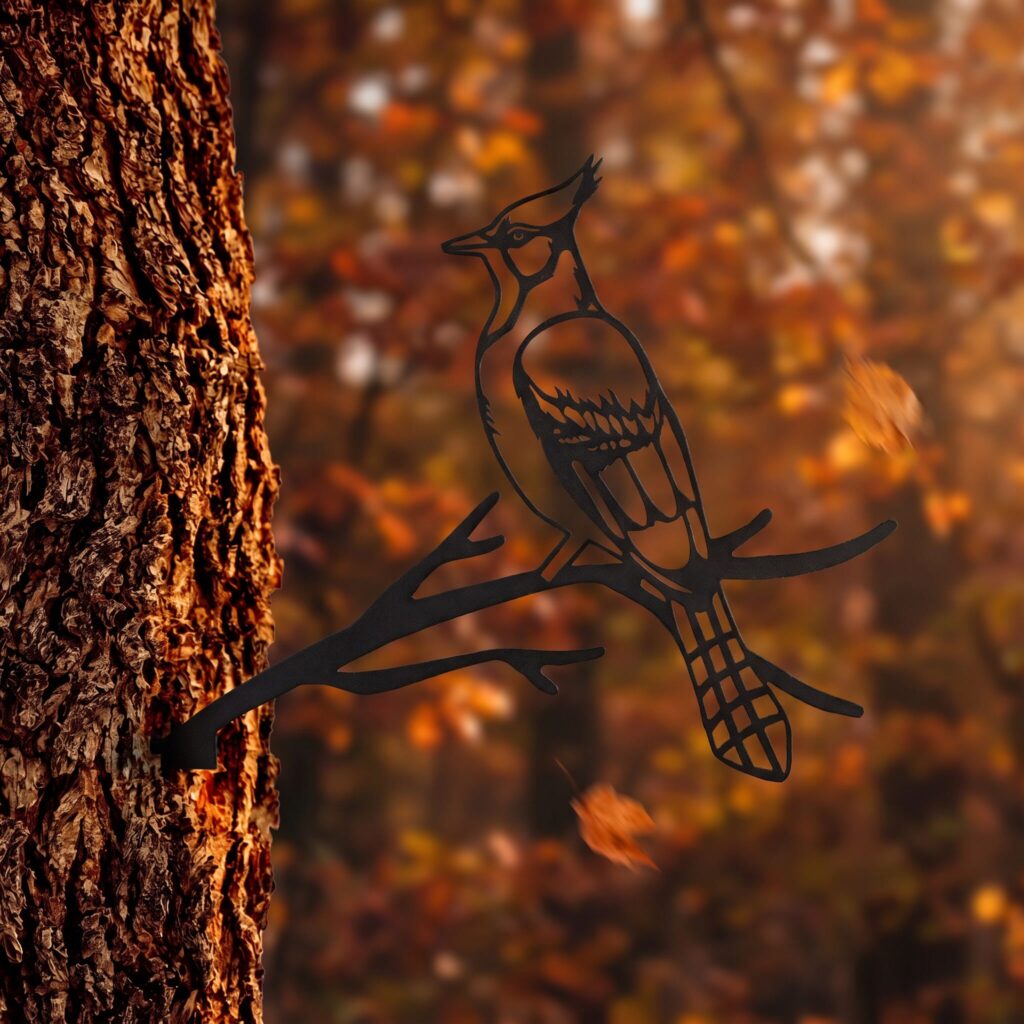
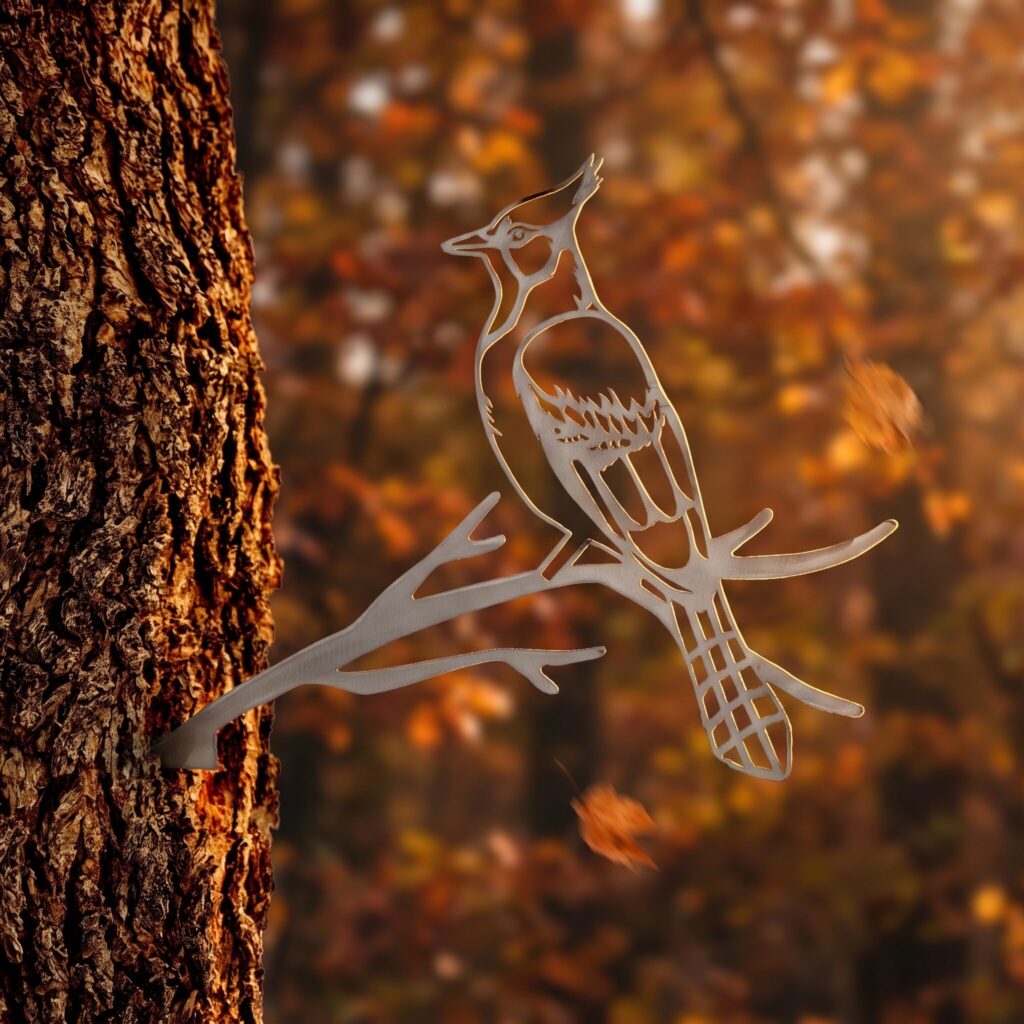
Every product page shows both finishes side by side, so you can see the difference on the same bird before you choose.
Pairing Corten steel with plants and stone
A weathered steel silhouette reads more clearly with some contrast behind it. A few combinations that work:
- Against green leaves. Rust-brown against summer green is the classic look, and it’s why a Raw Steel bird on a leafy trunk stands out without shouting.
- Near silver or gray foliage. Plants with silvery leaves make the warm steel look warmer.
- With purple and blue flowers. Lavender and salvia next to weathered steel make an easy, warm-and-cool pairing.
- On pale limestone or a light fence, choose Black instead, for the staining reasons above. A black silhouette against pale stone is crisp and clean.
How Corten steel looks through the seasons
One of the quieter pleasures of a weathered steel piece is watching it change against the yard around it.
- Spring. New leaves come in bright, and the steel looks darker and warmer by contrast.
- Summer. Against full green, a Raw Steel silhouette is easy to spot from across the yard.
- Autumn. The steel blends into the turning leaves. This is when the Raw Steel finish looks most at home.
- Winter. With the leaves gone and gray bark behind it, the shape stands out again, and a dusting of frost catches every edge.
If you like that seasonal rhythm, the Seasonal & Holiday collection lets you change what hangs on the tree along with it.
Where to hang Corten steel yard art
Put the last few answers together and you get a short list for placement:
- Somewhere it can dry. Sun and moving air beat a damp corner.
- Over soil, mulch or bark. Let the drip line land somewhere it won’t show.
- Away from pale surfaces while the patina is forming.
- With light behind it. A silhouette reads clearly when the light comes from behind.
If you’re putting it on a tree, our guide on whether a metal tree stake hurts the tree covers which trees to use, where on the trunk to put it, and how to set it once and leave it.
Living with Corten steel yard art: the first year
Here’s what most people notice, roughly in order.
In the first days, the Raw Steel finish looks like clean, dark gray metal. After the first good rain, the color starts to shift, often in streaks where the water ran.
Over the next weeks the surface warms toward orange-brown and the streaks begin to blend. This is the stage when runoff is most likely, so it’s worth a glance at what’s beneath the piece.
By the end of the first several months, most of the change is done, and the color holds steady. From there, it slowly deepens toward the darker brown the AISC describes as weathering steel ages.
The Black finish skips all of that. It looks in the tenth year the way it looked on the first day: a clean, consistent silhouette.
Finding a piece
The Shop All Silhouettes page has the whole line in one place: the Birds collection, Critters, the gnomes and other garden folk, and the Seasonal & Holiday collection. Every piece is solid steel, and every product page shows the exact size and both finishes.
If you’re choosing for a particular spot, decide the finish first. Stand where the piece will hang and look down: soil, mulch or bark below means either finish works, and a pale step or wall below points you to Black. Then pick the bird or the scene. Most pieces run between 7 and 17 inches, so a tape measure held up to the trunk or post tells you quickly which size suits it.
Questions customers ask
Will the Raw Steel finish rust?
Raw Steel is untreated, so yes, it will develop a natural weathered color once it’s outdoors. Most of that change happens in the first several months. After that, it holds steady. If you’d rather skip the process and keep a clean, consistent look, choose Black instead.
What are Shadow Birds pieces made of?
Solid steel. Most pieces come in a Raw Steel or Black finish.