
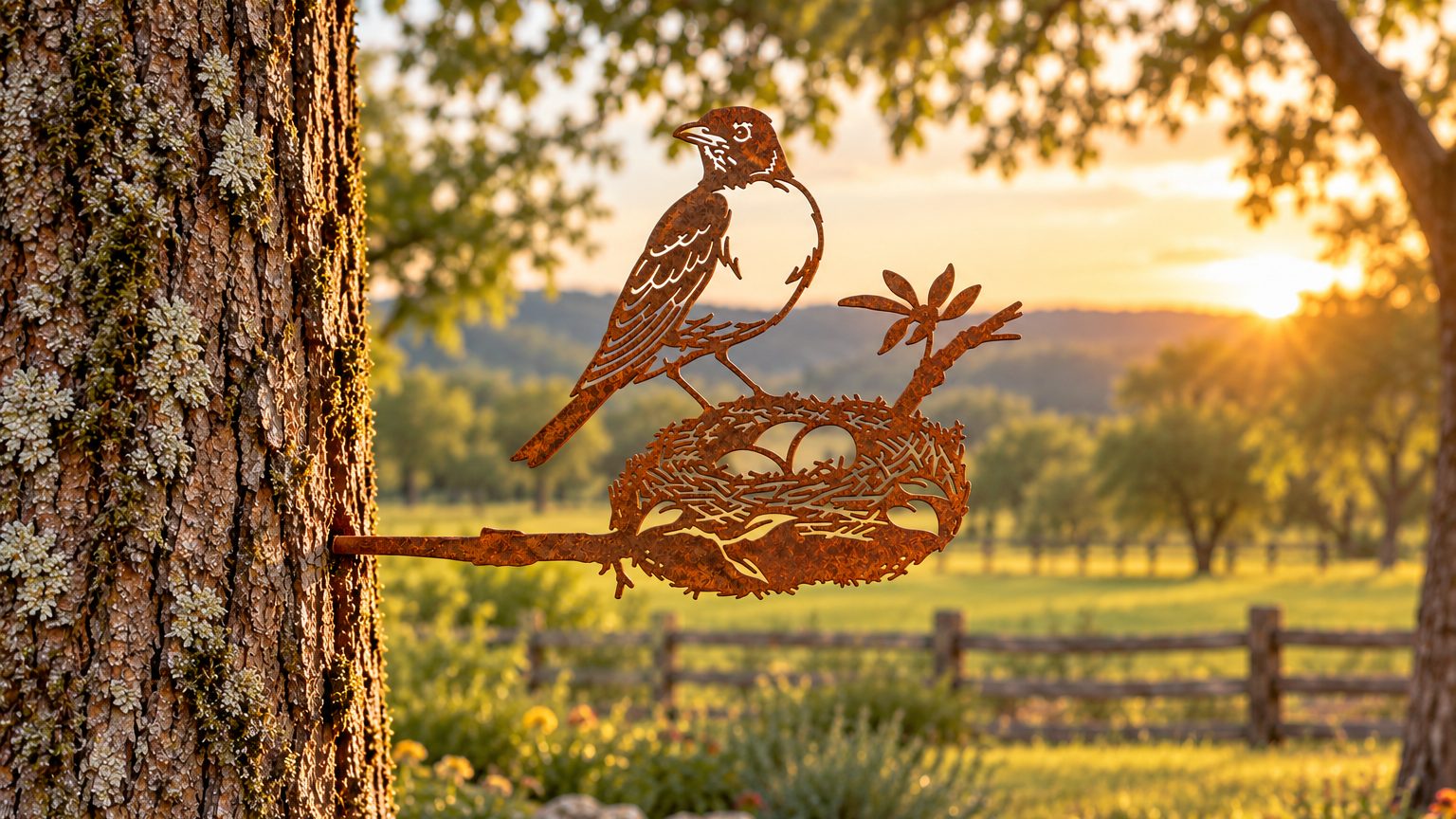
A metal tree stake leaves one small wound where it goes in. A healthy tree walls that wound off on its own, a process the USDA Forest Service calls compartmentalization. Set it once, in a sound tree, and leave it there.
That’s the short answer. The longer one is below, set out as the seven questions people ask us most before they put yard art on a tree. It covers what goes on inside the trunk, which trees to use and which to leave alone, how to set a tree stake properly the first time, and what to do if you’d rather not put steel in a tree at all.
What happens inside the tree when you tap a metal tree stake in?
Trees don’t repair damage the way skin does. They seal it off.
When something breaks the bark, the tree builds a barrier around the injured wood and keeps growing new wood outside it. The Forest Service researchers who described this, Alex Shigo and Harold Marx, called it compartmentalization of decay in trees, or CODIT. Their point was that a tree is built out of many small compartments, and that it walls off a wound inside the wood that was there when the injury happened.
In plain terms, the tree doesn’t try to fix the hole. It closes the door on it and carries on growing around it.
That’s why one clean hole matters much less than a lot of them. The arborists at Davey Tree put it plainly: every nail or screw leaves a wound, and the more holes you make, the more you stress the tree. One tree stake, one hole, done.
Which trees can take yard art, and which should you skip?
Pick a tree that’s already doing well. Davey’s advice is to leave hardware to healthy, mature trees at least 10 inches across, and to skip any tree that’s weak or already damaged.
A quick way to size it up: wrap a tape measure around the trunk at chest height. Ten inches across is a little over 31 inches around. If you come up short, it’s a fence post’s job.
Leave these trees alone:
- Young trees with thin, smooth bark that’s still growing fast.
- Trees with dead limbs, peeling bark or open cavities.
- Trees with mushrooms coming up from the base or the trunk.
- Anything you’re already worried about, or that a tree service has told you is on its way out.
- Palm trees. Palms are built differently from oaks and pecans: they have no vascular cambium, and wounds to the stem are permanent, according to the University of Florida’s palm anatomy guide. A pecan walls off a hole and grows over it; a palm keeps it for good.
If every tree in view is a sapling or a palm, use a fence post instead. A tree stake works just as well on wood that isn’t growing.
Does the kind of tree make a difference?
For the tree, health matters more than species. For you, the hardness of the wood is what you’ll notice.
Oak, pecan, cedar elm and other dense hardwoods push back. Softer wood takes a tree stake with a few taps. If the wood is hard, drill a small pilot hole first and it will go in easier. A pilot hole also means fewer, lighter hammer blows, so the bark around the stake stays tidy.
Some trees bleed a little sap or resin where they’re opened up. The treehouse builders at The Treehouse Shop note that trees with moderate wound response may resin heavily or open up slightly, and take a little longer to seal. A little sap on the bark is the tree doing its job, not a sign that something went wrong.
Where on the trunk should a metal tree stake go?
For the tree, the exact spot matters less than you’d think. Davey’s arborists say the location on the trunk doesn’t make a big difference; the tree’s health does.
So choose it for the view. Yard art is only worth having if you see it.
- Start at the window. Stand where you sit with your coffee, or at the kitchen sink, and pick the trunk you can see from there.
- Go around chest height. It reads well from across the yard, and it’s easy to reach when you set it.
- Face it toward you. Set it on the side of the trunk that faces the house or the walk, not the side that faces the neighbors.
- Think about the light. A silhouette reads clearly with light behind it. A trunk that catches the evening sun is a good one.
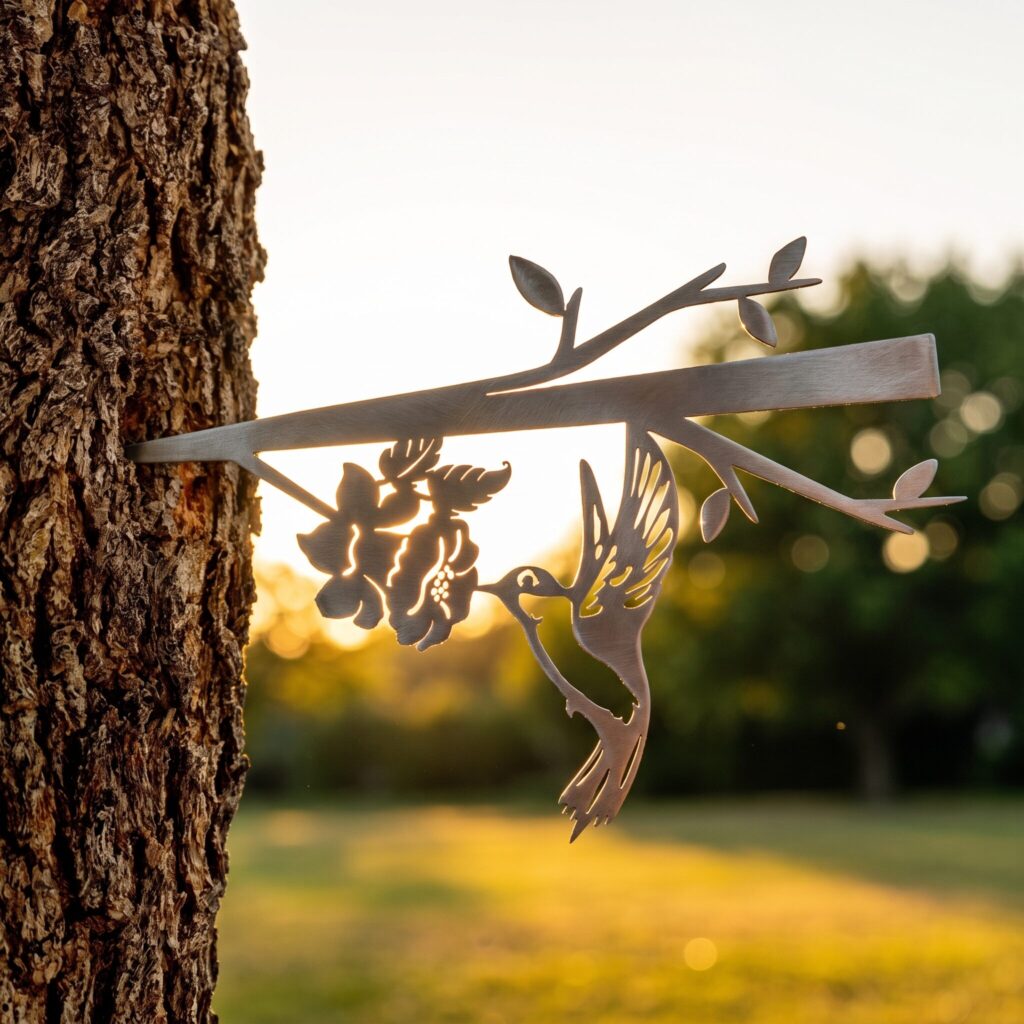
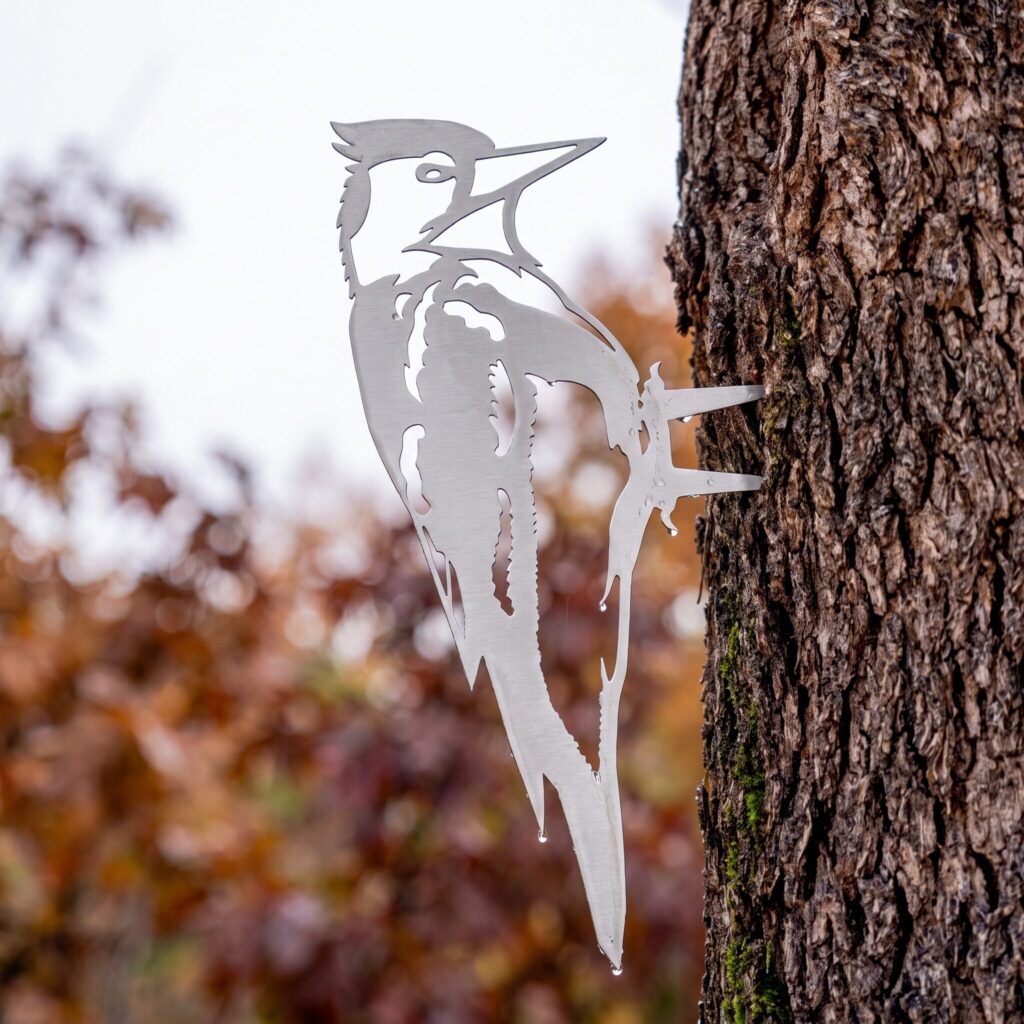
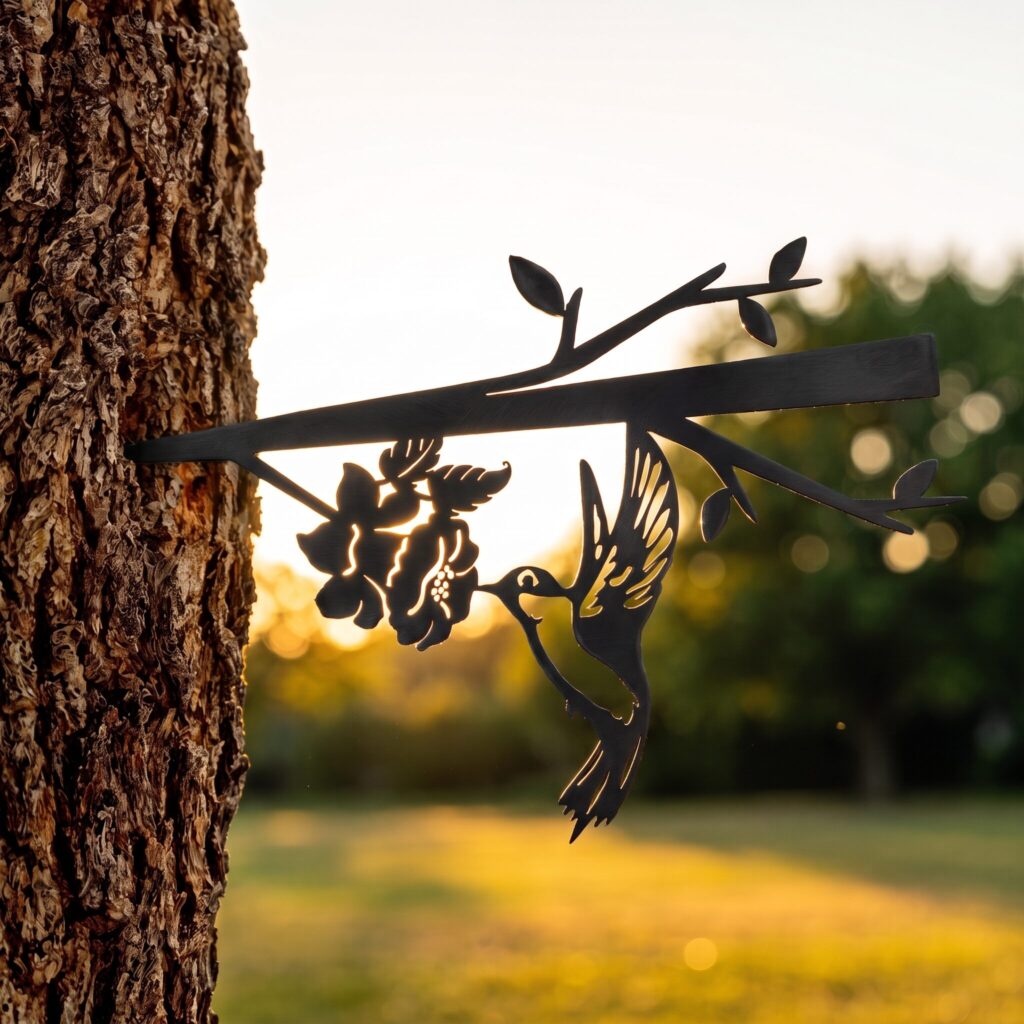
- Match the bird to the tree. A woodpecker goes flush against the bark, the way you’d find one. Most of our other pieces sit out from the trunk on a cut steel branch.
How do you install a tree stake, step by step?
You need a hammer, and a drill with a small bit if the wood is hard. That’s the whole tool list.
- Choose the spot before you pick up the hammer. Hold the tree stake against the trunk and have someone tell you how it looks from the house.
- Check the wood. Press a thumbnail into the bark. If it barely marks, drill a small pilot hole first.
- Tap the stake in with a hammer at a slight downward angle. The angle helps the tree stake hold its place as it settles.
- Stop when it’s snug. You only need it to hold, not to disappear. Tap until it doesn’t wiggle, then stop.
- Step back and look. If it’s crooked, a light tap on the low side usually squares it up.
- Leave it. Pulling it out and resetting it a few inches over is how one hole turns into three.
Setting a tree stake takes a few minutes. The part worth slowing down for is step one.
What about rust and the hardware question?
It’s a fair question, and we’d rather answer it straight.
Davey’s arborists prefer rust-proof hardware for anything left in a tree long-term. Our pieces are cut from 1/8-inch American Corten® steel, which weathers on the surface on purpose. The Raw Steel finish takes on a weathered color outdoors, and the Black finish keeps a clean, consistent look.
So you have three honest options:
- Put it in a tree that’s sound and mature, set it once, and let the tree seal around it.
- Put it on a wooden fence post, a porch post or the side of a shed, where there’s no living wood to think about.
- Choose the Black finish if you’d rather skip the weathered look.
If you want to know more about how Corten behaves outdoors, our guide on whether Corten steel yard art rusts goes through it.
Can you move it or take it down later?
You can. Just know that the hole stays behind, and the tree treats it like any other wound: it walls it off and grows over it in time.
Trees also keep growing outward every year. The Treehouse Shop puts it simply: trees grow around foreign objects and integrate them permanently. Over many years the bark can creep up around the stake. That’s another reason to set it once, in the right place, and not keep moving it.
If you like to change things with the seasons, there are two ways to do it without pulling stakes:
- Swap the pendants, not the stake. Our Autumn Stake has pendants that lift off the rings, so the branch stays up year round and only the leaves and acorns change.
- Use a fence post for the pieces you rotate. Keep a favorite bird in the tree, and give the holiday pieces a post by the porch.
What a tree stake looks like after a year, and after ten
In the first season, not much changes on the tree. The bark around the stake may darken a little, and some trees show a bead of sap where the wood was opened. On our Raw Steel finish, most of the color change in the steel happens in the first several months, then it holds steady.
Over the years, the tree does what trees do. It adds a new layer of wood each growing season, and the treehouse builders at The Treehouse Shop describe healthy trees covering a wound with reaction wood and forming sealing walls against fungi. Around a tree stake, that shows up as a slight swelling of bark at the base of the stake.
That’s normal, and it’s the tree working the way it’s meant to. It’s also why the stake should go in once, at a slight downward angle, and stay put.
Once a year, usually in spring when you’re out in the yard anyway, take a look:
- Is the tree stake still snug? If it has loosened, a light tap usually sets it again in the same hole. Don’t move it to a new spot.
- Is it still level? A gentle tap on the low side fixes a tilt.
- Is the view still good? Trees leaf out, shrubs grow, and the piece that stood out in March can disappear behind leaves by June.
Common mistakes with yard art on trees
Most problems with yard art on trees come from rushing the first five minutes. These are the ones we hear about:
- Testing spots with the hammer. Every trial hole is a real hole. Choose the spot by holding the piece up, not by tapping it in and looking.
- Setting the tree stake too low. Down by the roots it gets hidden by grass and hit by the string trimmer. Chest height reads from across the yard.
- Facing it the wrong way. It’s easy to set a piece square to the trunk and only realize later it faces the neighbor’s fence. Check from the window first.
- Picking the tree in winter only. A bare tree in January can be a wall of leaves in July. Think about what’s in front of the trunk in both seasons.
- Driving the tree stake too deep. It only needs to hold. Past snug, you’re just hitting the tree.
- Using a young tree because it’s closest. If the trunk is under about 10 inches across, Davey’s arborists suggest leaving it alone, and a fence post is the better home.
Matching the yard art to the tree you have
The tree often tells you which piece it wants. A few pairings that tend to work:
- A big oak or pecan in the front yard. This is the tree everyone sees from the street. The Seasonal & Holiday collection suits it, because you can change what hangs there with the calendar and the neighbors notice.
- A straight, bare trunk by the patio. A Woodpecker Stake sits flush against the bark, upright, the way the real bird spends its life. It suits a trunk with nothing else going on.
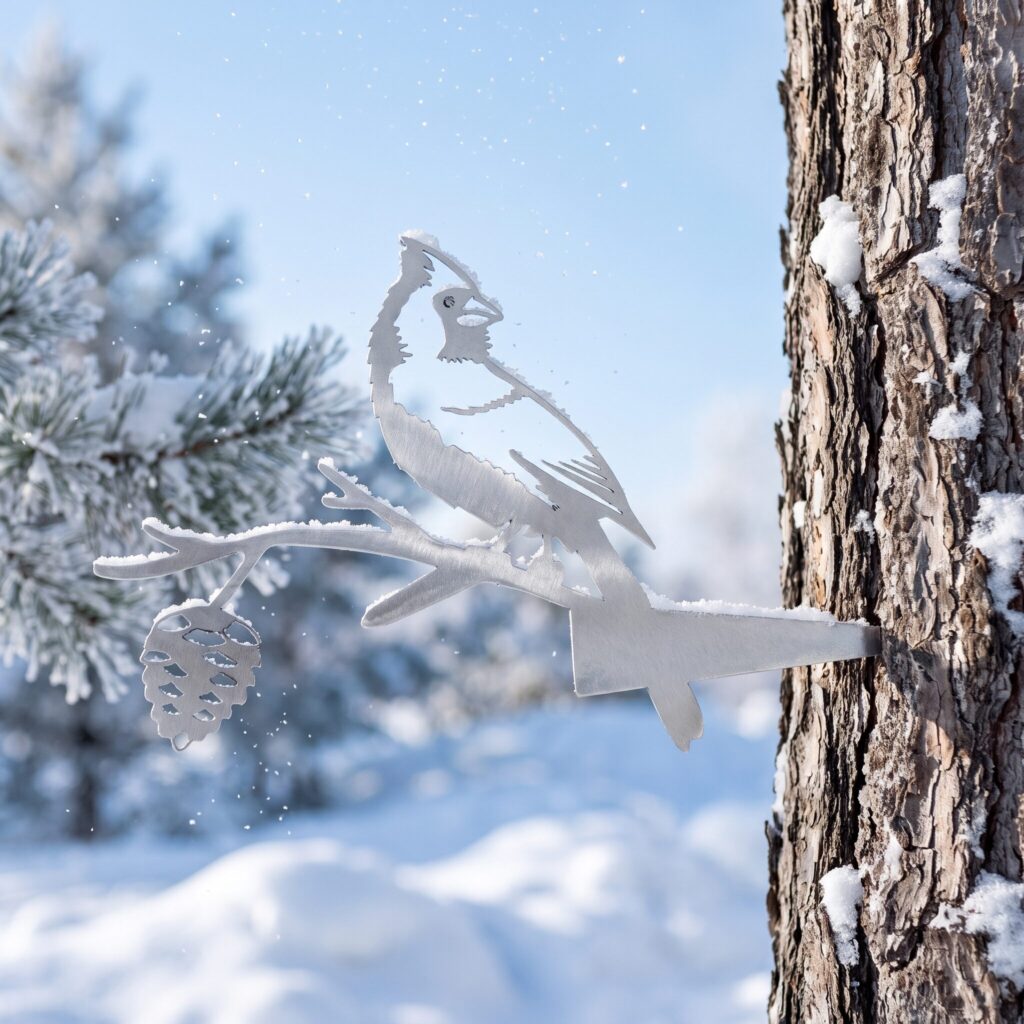
- The tree you see from the kitchen in winter. That’s the one for a Cardinal Stake. People tell us it’s the bird they want to see on a gray February morning.
- The tree outside a child’s window, or by the swing. A Mama Bird Stake with one, two or three eggs in the nest is a quiet way to mark the family that lives there.
- The tree by the garden gate. Garden folk belong there. The gnomes look like they wandered over from the flower bed.
Most pieces run between 7 and 17 inches, and the exact size of each tree stake is on its product page. Smaller pieces suit a slimmer trunk and a closer view. Larger ones hold their own on a big tree seen from across the yard.
One piece per tree is usually enough. Yard art reads more clearly with room around it, and every extra tree stake is another hole in the same tree.
If you rent, or you’re giving it as a gift
If you rent, ask before you put anything in a tree. A fence post, a porch post or the side of a shed is usually an easier conversation than a hole in the landlord’s oak, and every piece works there.
If yard art is a gift, the person opening it will have their own tree in mind. A short note helps: tap it in once, at a slight downward angle, in a sound tree or a wooden post, and drill a pilot hole first if the wood is hard. That’s everything they need to know.
It’s also worth saying where you pictured it. “For the oak you can see from the kitchen” turns a piece of steel into a small, specific thought, and it saves them standing in the yard wondering which tree you meant. If the gift is in memory of someone, the person may want to wait a while before they choose the spot. There’s no hurry. A tree stake keeps in its box until they’re ready.
If you’re setting it for someone else, an older parent, say, take a photo from their window once it’s in. Then they can tell you if they’d like it a little higher or turned a touch toward the house, before the hammer comes out again.
A quick checklist before you pick up the hammer
- The tree is healthy, mature and at least 10 inches across, or you’re using a post instead.
- It isn’t a palm.
- You’ve picked the spot from the window you look out of most.
- The yard art faces the house, around chest height, with light behind it.
- You have a small drill bit ready if the wood is hard.
- You’re setting the tree stake once, and leaving it.
Fence posts, walls and other places for yard art
Not every yard has the right tree, and not everyone wants to put steel in one. That’s fine. A tree stake goes into a wooden fence post, a porch post or a wall just as easily.
A few spots that work well:
- The post at the end of the drive. It’s the first thing people see.
- The gatepost by the garden. Good for a gnome or a butterfly.
- The porch post by the door. Good for a welcome piece.
- The side of the shed or the garage. Good for something you want to see from the kitchen.
The same rules apply: pick it for the view, set it once, and give it light from behind if you can.
If you’re still deciding where a piece should go, these yard art ideas walk through sight lines, height and background.
Finding the right piece for your tree
The Birds collection is a good place to start: cardinals, a woodpecker made to sit flush against the trunk, and the rest of the tree line. Each product page lists the exact size, so you can hold a tape measure up to the trunk before you order. Most pieces run between 7 and 17 inches.
If the tree is in the front yard, the Seasonal & Holiday collection gives you something to change with the calendar. If it’s the tree you see from the back porch, a single bird you love is usually the right call.
Questions customers ask
Can I put it in a fence post instead of a tree?
Yes. A wooden fence post, a porch post or a wall all work.
How do I install it?
Find your spot, then tap the stake in with a hammer. If the wood is hard, drill a small pilot hole first and it will go in easier.
Sources
- Compartmentalization of Decay in Trees, USDA Forest Service Agriculture Information Bulletin 405 (Shigo and Marx, 1977)
- Do nails, screws or staples hurt trees? Davey Tree Expert Company blog, 7 May 2019
- Palm Morphology and Anatomy, University of Florida IFAS Extension (T. K. Broschat, 2019)
- Are screws and bolts harmful to the tree? The Treehouse Shop