
Good native plants for birds in Texas give them something in every season: berries from yaupon, possumhaw and Texas persimmon, seeds from Maximilian sunflower and little bluestem, nectar from Turk’s cap and autumn sage, and cover from live oaks, cedar elms and agarita. Plant in fall, put out shallow water, and leave the seed heads standing.
That’s the short list. Below are the fourteen native plants we’d reach for first in Central Texas and the Hill Country, sorted by what each gives birds, plus when to plant, how to handle water and seed heads, which backyard birds to expect, and where to buy native plants. We’re in Salado, in Bell County, so this is written from the middle of the state.
Why native plants for birds matter
A feeder hands out seeds. Native plants grow the food nesting birds raise their young on, and Audubon puts it plainly: without native plants and the insects that co-evolved with them, local birds cannot survive.
The numbers are what stick. Citing the entomologist Doug Tallamy, Audubon notes that native oak trees support over 500 species of caterpillars, while ginkgos, a commonly planted landscape tree from Asia, host only 5. The same page says it takes over 6,000 caterpillars to raise one brood of chickadees, and PBS’s Nature, drawing on Tallamy’s research, puts it at between 6,000 and 9,000 caterpillars.
It isn’t only chickadees. Cardinals eat seeds and fruit most of the year, but the Cornell Lab notes they feed their nestlings mostly insects. Audubon also reports research finding that Carolina Chickadees need a landscape with 70 percent native plants to keep their population steady.
So the case for native plants comes down to a chain. The native plants feed the caterpillars, the caterpillars feed the nestlings, and in fall and winter the same native plants put out berries and seeds for the grown birds. A feeder is fine. It just covers one part of the year’s menu.
Native plants for birds that bear berries
Berries carry backyard birds through fall and winter, when the insects thin out. These four native plants are worth knowing.
Yaupon (Ilex vomitoria). An evergreen holly native as far west as central Texas that, per the Wildflower Center, tolerates drought and poor drainage. Many species of birds eat the fruit, but usually only in late winter after several freezes and thaws, which makes yaupon a late pantry, and birds use the dense branches for nesting sites. Before you buy: you need both a male and a female plant to have berries, and nursery plants are typically female, so a male nearby matters.
Possumhaw (Ilex decidua). Yaupon’s deciduous cousin drops its leaves and keeps its fruit: clusters of persistent red berries on female trees which provide winter color. The Wildflower Center notes that opossums, raccoons, other mammals, songbirds and gamebirds eat the fruit. Its native habitat is low, wet woods and river bottoms, so it suits the damp corner of the yard.
Texas persimmon (Diospyros texana). A small tree that is very common in central and south Texas. Its black fruit ripens from late July into September, and the fruits attract birds and mammals, especially deer, so expect company. It’s low water, highly drought tolerant, and grows in limestone, clay and caliche, though only female trees bear fruit.
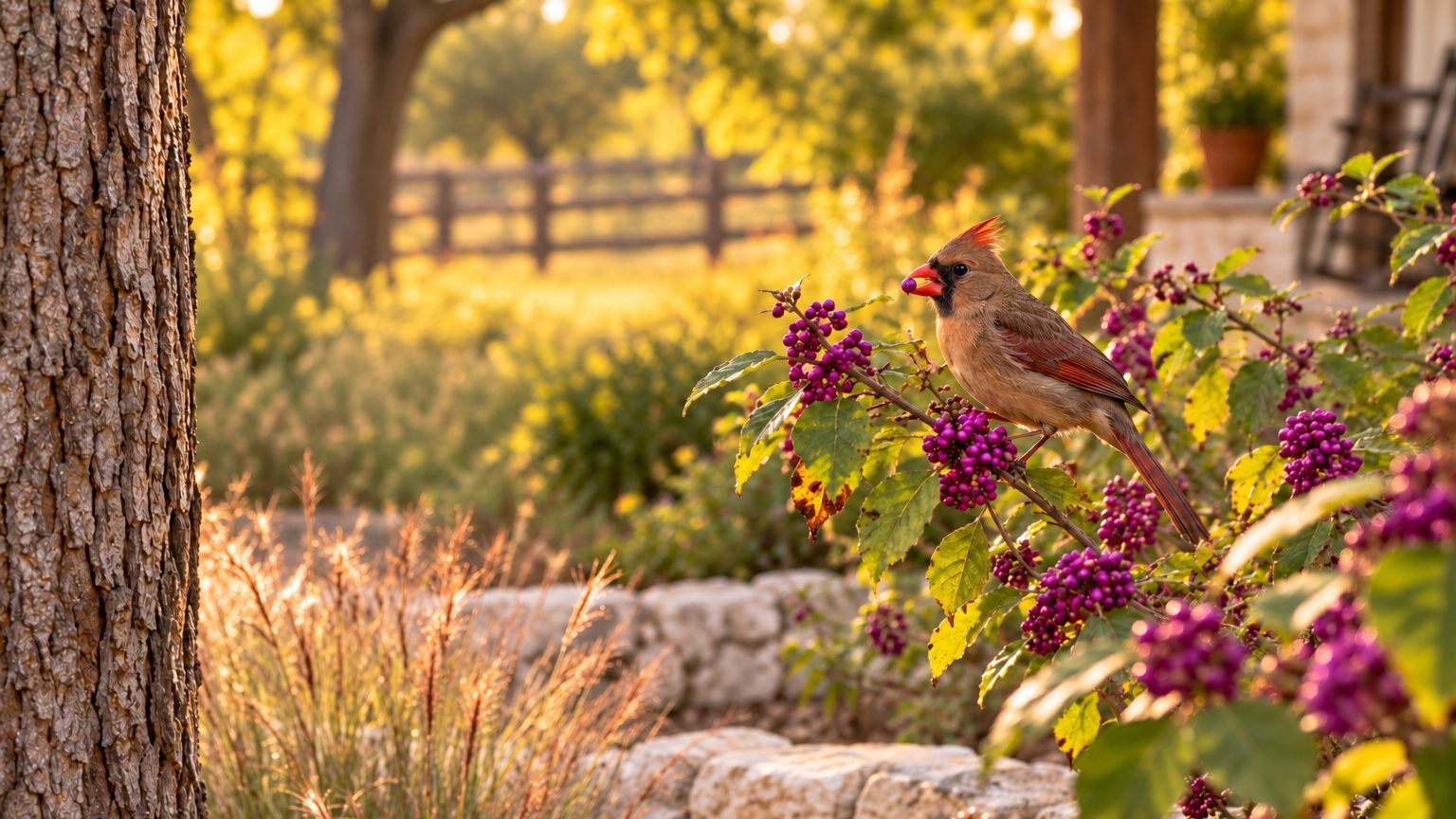
American beautyberry (Callicarpa americana). The one with startling purple berries along the stems. It’s an eastern woodland plant by nature that wants part shade and moist soil, and may lose its leaves and developing fruit in a long summer drought, so give it the shady side of the house and a drink in August. The payoff: the seeds and berries are important foods for many species of birds, particularly the Northern Bobwhite.
Seeds: native plants to leave standing
Seed plants feed birds twice: first with the insects that visit the flowers, then with the seeds once the heads dry.
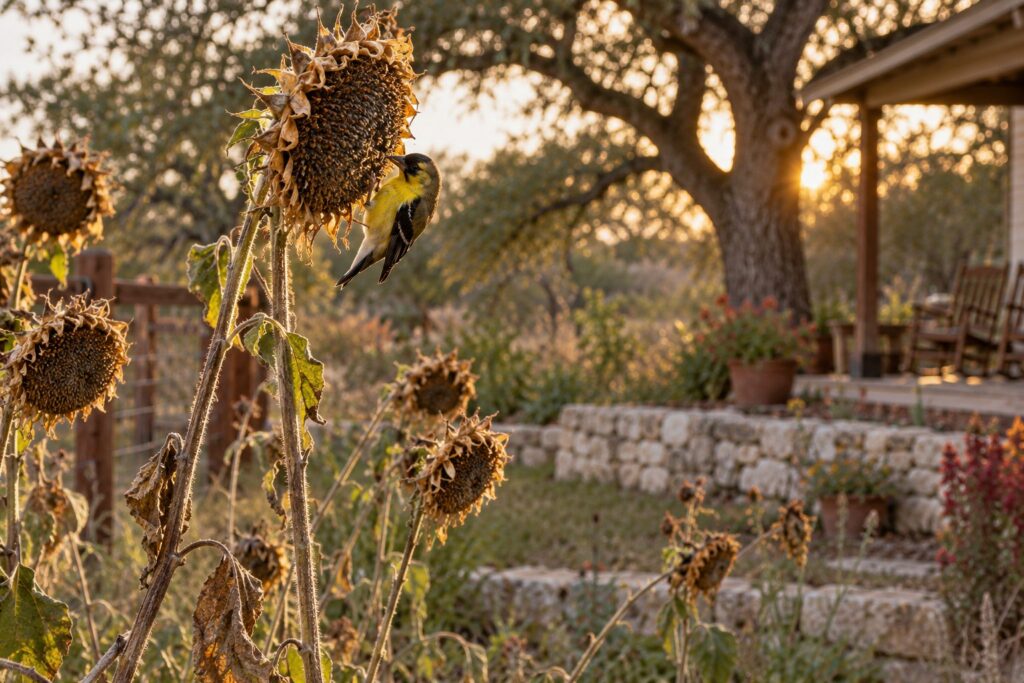
Coneflower (Echinacea). Purple coneflower is the familiar one, though its wild range only reaches the extreme northeast corner of Texas, and it can become very aggressive. For a dry Central Texas bed, its cousin black samson is more drought tolerant than purple coneflower. The bird value is in the dried cones: during the cold months, goldfinches perch on or just below the blackened winter cones to pluck out the seeds, the National Wildlife Federation notes.
Maximilian sunflower (Helianthus maximiliani). A tall perennial sunflower, 3 to 10 feet, blooming August through November. The Wildflower Center notes that a heavy crop of seeds is produced, and numerous species of birds eat the seeds. Give it the back of a sunny bed or a fence line, and thin it if it wanders.
Little bluestem (Schizachyrium scoparium). A bunchgrass that turns radiant mahogany-red with white, shining seed tufts in fall. The seeds are of particular value to small birds in winter, and the clumps give cover and nesting material. It’s highly drought tolerant but won’t tolerate wetlands or sub-irrigated sites, so keep it out of the soggy spot.
Nectar: native plants for hummingbirds
Texas Parks and Wildlife keeps the rule simple: all hummingbirds are attracted to red, tubular flowers. They also get the protein they need by eating the small insects and spiders they find in flowers, one more reason to skip the spray.
Turk’s cap (Malvaviscus arboreus var. drummondii). If you have shade, start here. It prefers partially shady sites, is drought tolerant, and blooms May through November, with red flowers in showy profusion during hot weather at the end of summer and early fall. The Wildflower Center lists nectar for hummingbirds and fruit for birds, and a Texas Parks and Wildlife newsletter listed Turk’s cap and salvia among its participants’ top hummingbird plants.
Coral honeysuckle (Lonicera sempervirens). The native honeysuckle, a slender climbing vine for a fence or trellis. It is frequently visited by hummingbirds, blooms March through June and intermittently after, and has fruits that attract quail, Purple Finch, Goldfinch, Hermit Thrush and American Robin. The Wildflower Center notes it needs light, good air circulation and adequate drainage to prevent powdery mildew.
Flame acanthus (Anisacanthus quadrifidus var. wrightii). Also sold as hummingbird bush, and a true local, native to south-central Texas on the southern Edwards Plateau. It blooms red-orange from June through October, and the Wildflower Center notes that its ability to attract hummingbirds has made it increasingly popular in landscapes.
Autumn sage (Salvia greggii). The Native Plant Society of Texas notes that although its natural range is west Texas, it has become popular in gardens across the state. It blooms March through November in full sun and dry, rocky soil, and the society lists hummingbirds among its wildlife benefits.
Plant two or three of these and you’ll have red flowers from spring into November. For which hummingbirds pass through and when, see our guide to hummingbirds in Central Texas.
Cover and nesting: native trees and thorny shrubs
Native plants for birds aren’t only about food. Birds also need somewhere to hide from a hawk, ride out a norther and build a nest.
Live oak. Escarpment live oak, also called plateau or Hill Country live oak, is common in landscaping and in the wild in central Texas, and it provides cover and nesting sites for birds and small mammals, and its acorns feed birds and mammals. Southern live oak, which reaches west to east Texas, does the same job. Add the caterpillar count above, and an oak earns its spot at the top of any list of native plants for birds. One caution: the Texas A&M Forest Service asks people to avoid pruning or wounding oak trees from February through June, and to always paint wounds on oaks because of oak wilt.
Cedar elm (Ulmus crassifolia). A drought tolerant shade tree for a broad range of soil types whose wildlife list covers a lot: seeds for granivorous birds, cover, nesting sites, and a place for insect-eating birds to forage. The Mourning Cloak and Question Mark butterflies use it for larval food, and those caterpillars go straight back into the chain.
Agarita (Mahonia trifoliolata). A stiff shrub with prickly, holly-like leaves, yellow flowers from February through April and red berries from May to July. The Wildflower Center sums it up: songbirds eat the fruits, and quail and small mammals use the plant for cover. It’s low water, prefers rocky, limestone-based soil, and has high deer resistance. The prickles are the point: a small bird tucked inside is hard for anything else to reach.
Dense shrubs and vines matter for nesting too. Cardinal nests tend to be wedged into a fork of small branches in a sapling, shrub, or vine tangle, which is what a yaupon thicket or a fence of coral honeysuckle offers.
A simple plan for a small yard
You don’t need an acre to grow native plants for birds. Think in layers, the way a woodland edge is built:
- One tree: an escarpment live oak or a cedar elm.
- Three to five shrubs: a female yaupon with a male nearby, an agarita by the fence, a possumhaw in the low spot.
- A sunny bed: autumn sage and flame acanthus up front, coneflowers and little bluestem behind, Maximilian sunflower at the back.
- A shady bed: Turk’s cap under the tree, and beautyberry where the hose reaches.
- A vine: coral honeysuckle on the fence.
- Water: a shallow birdbath in the open.
Then look at it from the window you use most. That’s where you’ll watch your backyard birds from, so plant native plants with that view in mind.
When to plant native plants in Central Texas
Fall. It feels backward if you grew up planting in spring, but in Texas fall is the season to put native plants in the ground.
Texas A&M extension horticulturists put it directly: in warmer parts of Texas, the fall season is actually a better time than spring for planting and root establishment, because plant roots grow anytime the soil temperature is about 40 degrees F or slightly higher. AgriLife Extension in Williamson County, just south of us, recommends planting trees and shrubs in the fall so they have the cooler months to develop a good root system before the summer heat comes back.
Around Bell County, that means October and November, once the heat breaks. A few tips for new native plants:
- Water through the first summer. Drought tolerance comes after roots settle; the Wildflower Center describes southern live oak as fairly drought tolerant once established.
- Mulch, but keep it off the stems.
- Start small. A one-gallon pot planted in October is a fine beginning.
Water, seed heads and skipping pesticides
Three habits do almost as much as the native plants themselves.
Put out shallow water. The Cornell Lab suggests a birdbath with a gentle slope and water no deeper than 1 inch at the edges, and says to change the water every day or two, which in a Texas August you’ll want to do anyway. Leave open ground between the birdbath and the nearest thick shrubbery so a cat can’t wait in ambush, and add a drip if you can, since many birds find the sight and sound of moving water irresistible.
Leave the seed heads. The National Wildlife Federation suggests you leave spent flower stalks until spring so that birds can feast on the seeds, since seed-eating birds such as juncos and goldfinches flock to the dried flower heads at a time when other food is scarce. If the neighbors fret, mow a clean edge around the bed. A crisp border makes a wild bed look intended.
Skip the pesticides. Audubon points out that the traditional suburban lawn, on average, has 10x more chemical pesticides per acre than farmland. An insecticide can’t tell the caterpillar you mind from the 6,000 or so it takes to raise one brood of chickadees. A few chewed leaves mean your native plants are doing their job.
Which backyard birds native plants bring in
Once the native plants fill in, these are the backyard birds to watch for in a Central Texas yard.
Cardinals. They eat mainly seeds and fruit, supplementing these with insects, so a native yard covers them year round. If you’ve watched a pair at the birdbath and wondered, we looked at whether cardinals mate for life.
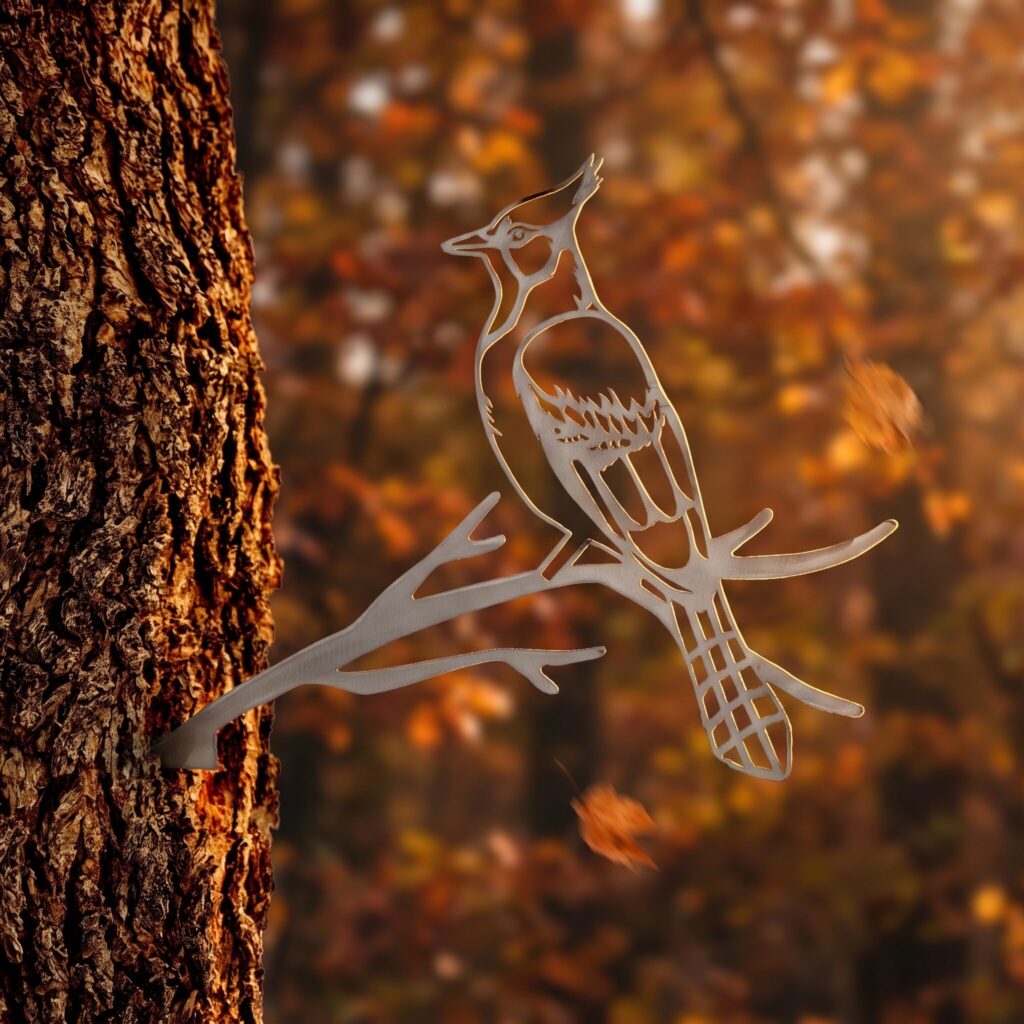
Blue jays. Jays are found in all kinds of forests but especially near oak trees, and their habit of burying acorns is credited with spreading oak trees after the last glacial period. Plant a live oak and you’re feeding the next generation of jays. For the folklore side, see what a blue jay means.
Chickadees. Carolina Chickadees are the insect hunters among our backyard birds. Outside winter, about 80 to 90 percent of their diet is animal, mostly insects and spiders.
Titmice. Ours is the Black-crested Titmouse, and few habitats in central and southern Texas are without at least a few. They eat beetles, flies, moths and their larvae, as well as seeds, acorns and berries.
Hummingbirds. Central Texas sits on a line. Texas Parks and Wildlife notes that Black-chinned hummingbirds generally occur west of IH 35 in central and western Texas, while Ruby-throated hummingbirds are found throughout the eastern part of Texas. Along I-35, you may see both.
Finches. The Lesser Goldfinch eats mainly seeds from the sunflower family, the family coneflowers and Maximilian sunflowers belong to. Leave those heads standing and the finches will find them, along with plenty of other backyard birds.
Woodpeckers. The Golden-fronted Woodpecker makes its home in the dry brushlands and bosques of Texas, and in Texas they eat acorns and the fruits of prickly pear cactus, sumac, hackberry, soapberry and wolfberry.
One bird you may not want: if grackles crowd the feeder, people sometimes reach for a plastic owl. Before you buy one, read our look at whether owl decoys work.
Where to buy native plants in Texas
The big-box garden center is hit or miss for native plants for birds. As the Native Plant Society of Texas puts it, Texas native plants can be difficult to find at the typical nursery.
- Native plant society sales. Each spring and fall, Society volunteers plan and host native plant sales. Find the chapter nearest you and get on its list.
- Local nurseries. Ask for the native plants section, and ask whether the yaupon and possumhaw are females with berries.
- Audubon’s database. Audubon’s native plant database lets you find plants for the birds in your area by zip code.
- The Wildflower Center’s plant pages. Check native range, light and water before you buy native plants anywhere.
The society’s own caution is worth repeating: some plants at these sales may or may not be native to Texas, so do your own homework to learn about plants for your ecoregion. Read the botanical name on the tag, not just the common one.
Yard art that marks the spot without crowding the plants
A new bed takes a season or two to fill in. Meanwhile, a steel silhouette can mark the spot and give the eye somewhere to land, as long as it doesn’t compete with the native plants.
- Put it at the edge, not in the middle. A fence post, a porch post or a mature tree behind the bed works, since every piece taps in with a hammer.
- Leave young trees alone. A sapling you planted this fall isn’t the place for steel; our guide on whether a metal tree stake will hurt a tree covers which trees can take it.
- Let one piece do the job. One bird by the bed reads clearly.
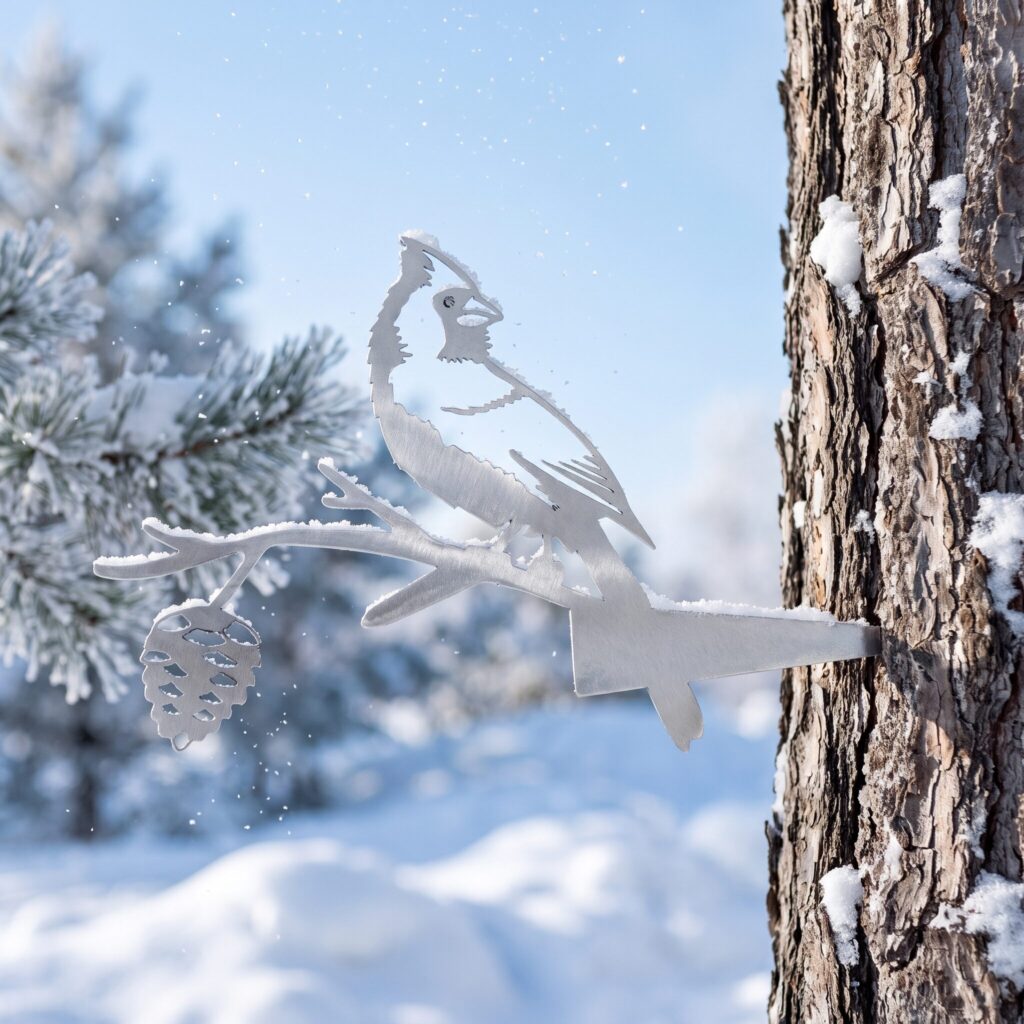
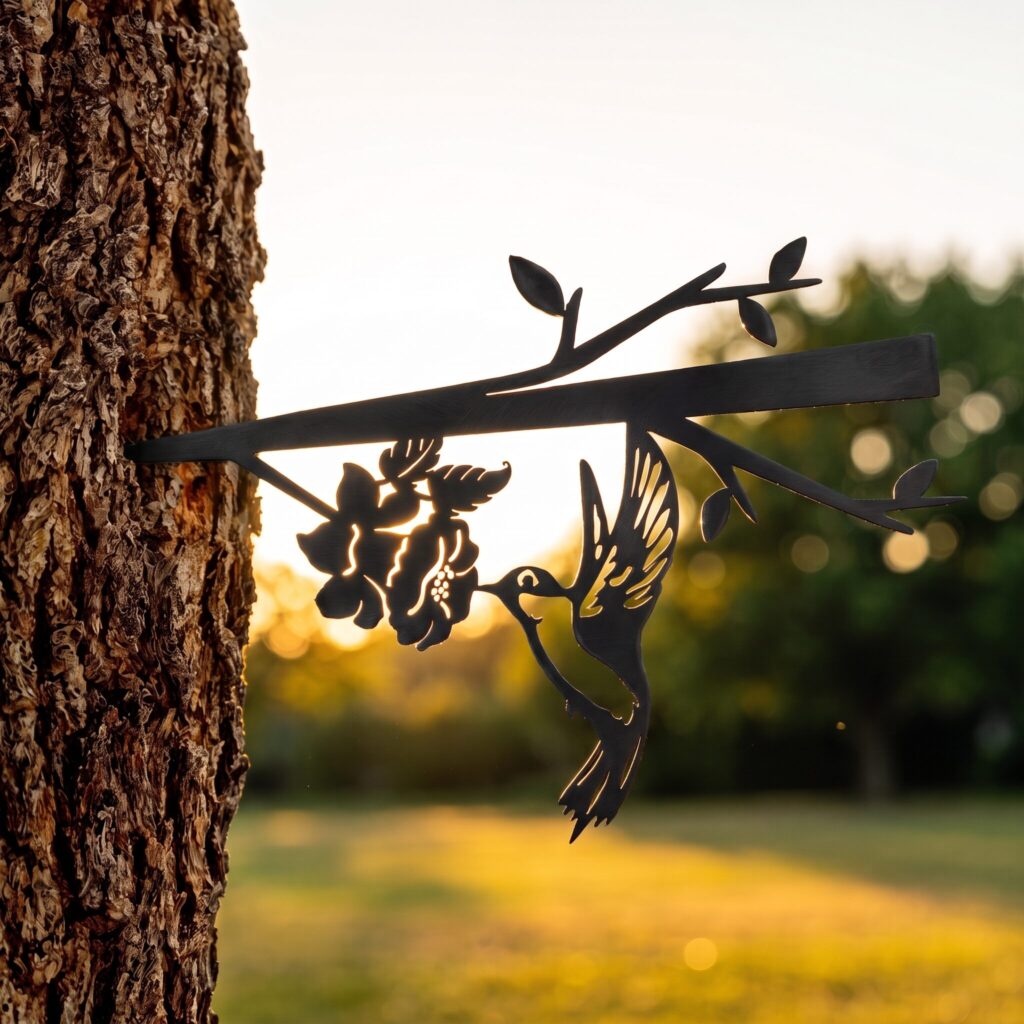
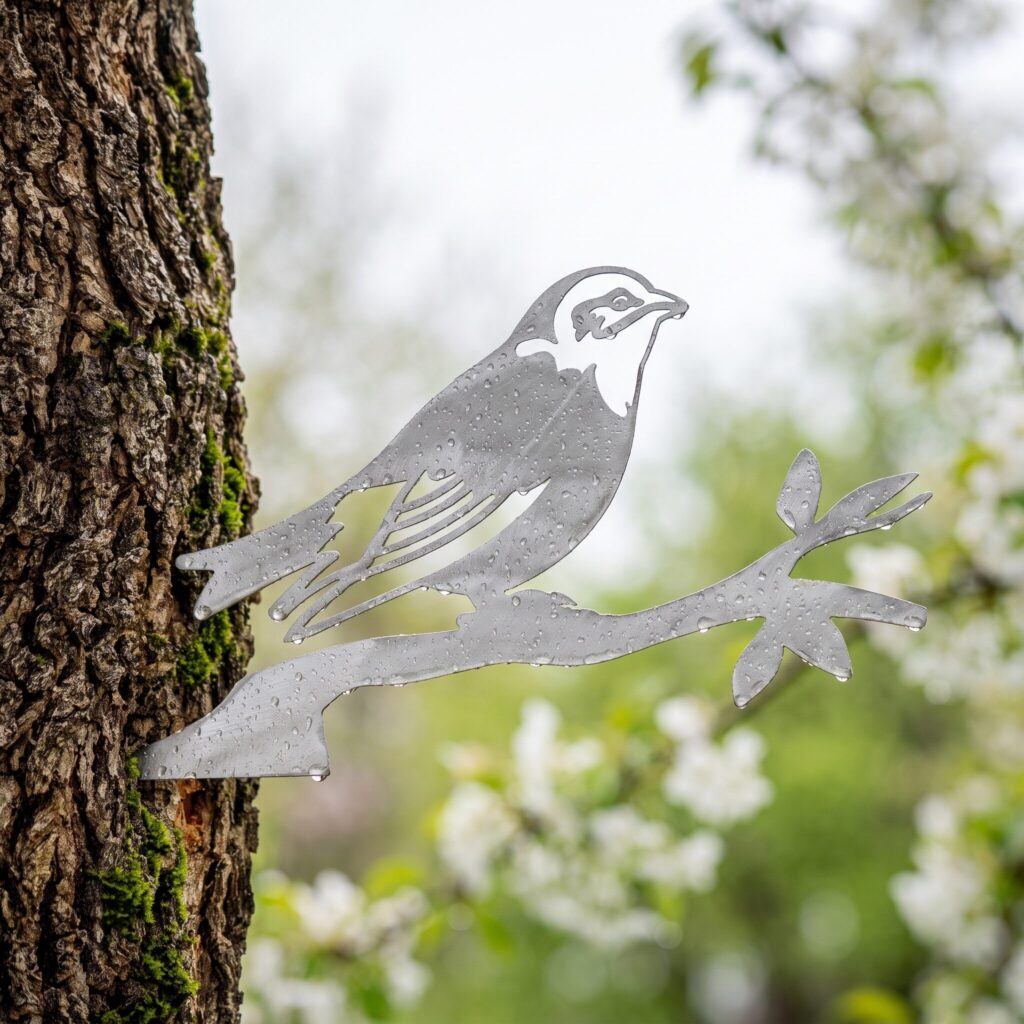
Then match the bird to the planting. A Cardinal Stake belongs by the yaupon you see from the kitchen in winter, and a Blue Jay Stake suits the live oak. A Hummingbird Stake on the post by the Turk’s cap marks the hummingbird bed, and a Finch Stake sits well over the coneflowers. A Woodpecker Stake goes flush against a trunk. The rest of the tree line is in the Birds collection.
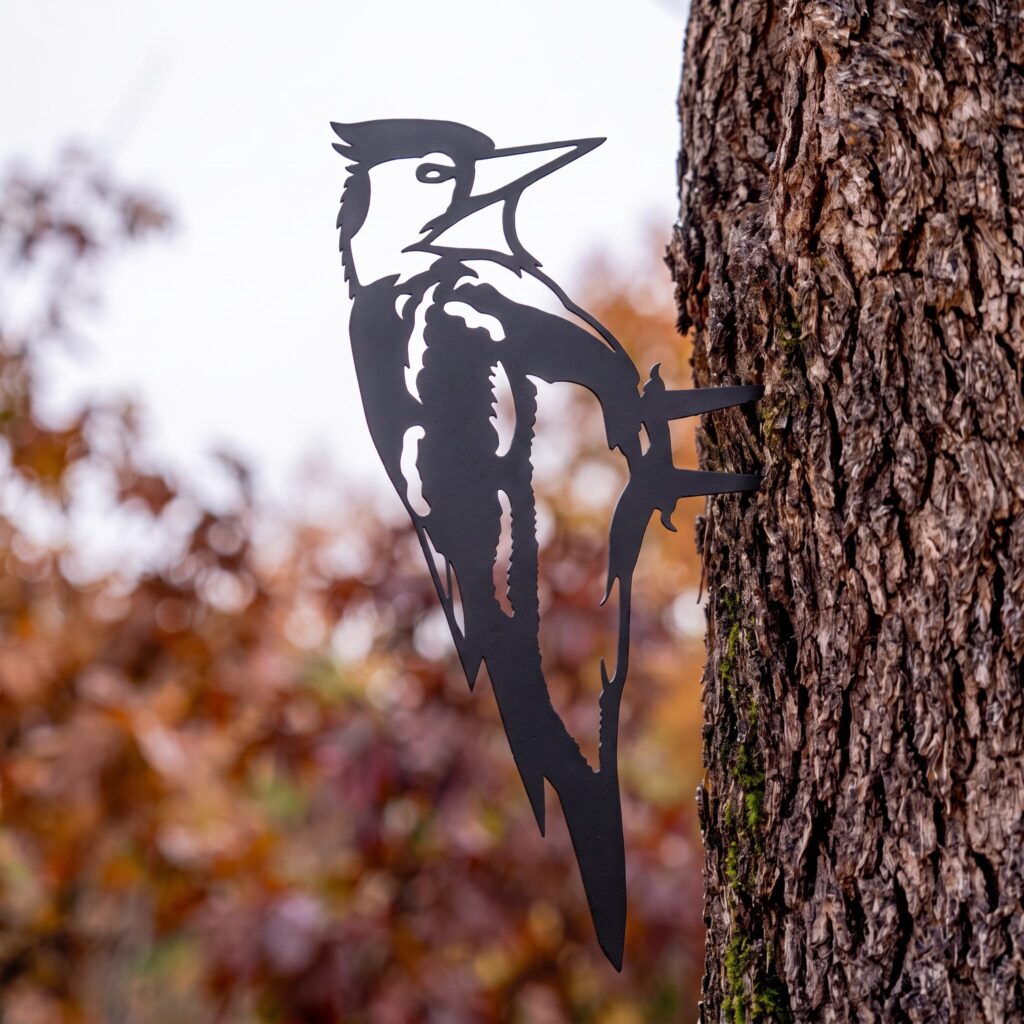
Every piece is solid steel. Raw Steel weathers outdoors, with most of the change in the first several months, and Black keeps a clean, consistent look. Most pieces run 7 to 17 inches, with exact dimensions on each product page.
If you’re planting in someone’s memory, a bed of native plants that draws birds is a quiet way to do it, and our memorial garden ideas go further. Shopping for a gardener? A native shrub and a steel bird to stand watch over it make a pair, and there are more in our garden gift ideas.
Questions customers ask
How do I install it?
Find your spot, then tap the stake in with a hammer. If the wood is hard, drill a small pilot hole first. It works in a tree, a wooden fence post, a porch post or a wall.
Will the Raw Steel finish rust?
It weathers outdoors on purpose. Most of the change happens in the first several months, then it holds steady. If you’d rather keep a clean, dark silhouette, choose Black.
What’s your shipping policy?
Orders of $99.99 and up ship free.
Sources
- Why Native Plants Matter, Audubon
- Plants for Birds, Audubon
- New Research Shapes Author’s Advice for Wildlife Gardeners, PBS Nature, 2019
- Yaupon, Wildflower Center
- Possumhaw, Wildflower Center
- Texas persimmon, Wildflower Center
- American beautyberry, Wildflower Center
- Purple coneflower, Wildflower Center
- Black samson, Wildflower Center
- Maximilian sunflower, Wildflower Center
- Little bluestem, Wildflower Center
- Turk’s cap, Wildflower Center
- Coral honeysuckle, Wildflower Center
- Flame acanthus, Wildflower Center
- Escarpment live oak, Wildflower Center
- Southern live oak, Wildflower Center
- Cedar elm, Wildflower Center
- Agarita, Wildflower Center
- Autumn sage, Native Plant Society of Texas
- Native Plant Sales, Native Plant Society of Texas, 2023
- Ruby-throated Hummingbird, Texas Parks and Wildlife
- The Texas Hummer, Texas Parks and Wildlife, 2004
- Fall is for Planting, Texas A&M Extension, Bexar County, 2006
- Fall planting, AgriLife Extension, Williamson County
- Prevent the spread of oak wilt, Texas A&M Forest Service, 2021
- Setting a Winter Table for Wildlife, National Wildlife Federation, 2011
- Attract Birds With Birdbaths, Cornell Lab
- Northern Cardinal, Cornell Lab
- Blue Jay, Cornell Lab
- Carolina Chickadee, Cornell Lab
- Black-crested Titmouse, Cornell Lab
- Lesser Goldfinch, Cornell Lab
- Golden-fronted Woodpecker, Cornell Lab